The Lift
Strategies worth betting your budget on.
Latest articles

Is an IP Address PII? What US Privacy Law Means for Identifying Website Visitors
California's privacy statute lists an Internet Protocol address by name and treats it as personal information whenever it can reasonably be linked to a consumer or household. This guide walks what an IP address becomes at each step of website visitor identification, when the opt-out signal in the browser has to be honoured, what the California pen-register cases and the Washington wiretap case actually held, and what five identification vendors say they do about all of it.

Lead Routing for Identified Website Visitors: From Identified to Pipeline
Identifying a website visitor produces a name, a work email and a page path. What the CRM does with that record in the next sixty seconds decides whether anyone ever acts on it. This guide sets out the five routing decisions in the order they have to run: confidence, buyer-versus-candidate, match before create, owner assignment, and create with the owner already set, with the HubSpot, Salesforce and Bullhorn mechanics for each.
What Website Visitor Identification Costs in 2026
Website visitor identification is sold from $0 a month to $96,000 a year, and the published figure tells you very little on its own. Vendors charge in at least seven different units, so two plans at the same price can buy volumes that differ tenfold. This guide lists every published price as of September 2026, normalises them to cost per identified person, and gives you four questions that make the comparison fair.
Browse all articles
Klaviyo vs Omnisend for WooCommerce: The 2026 Comparison
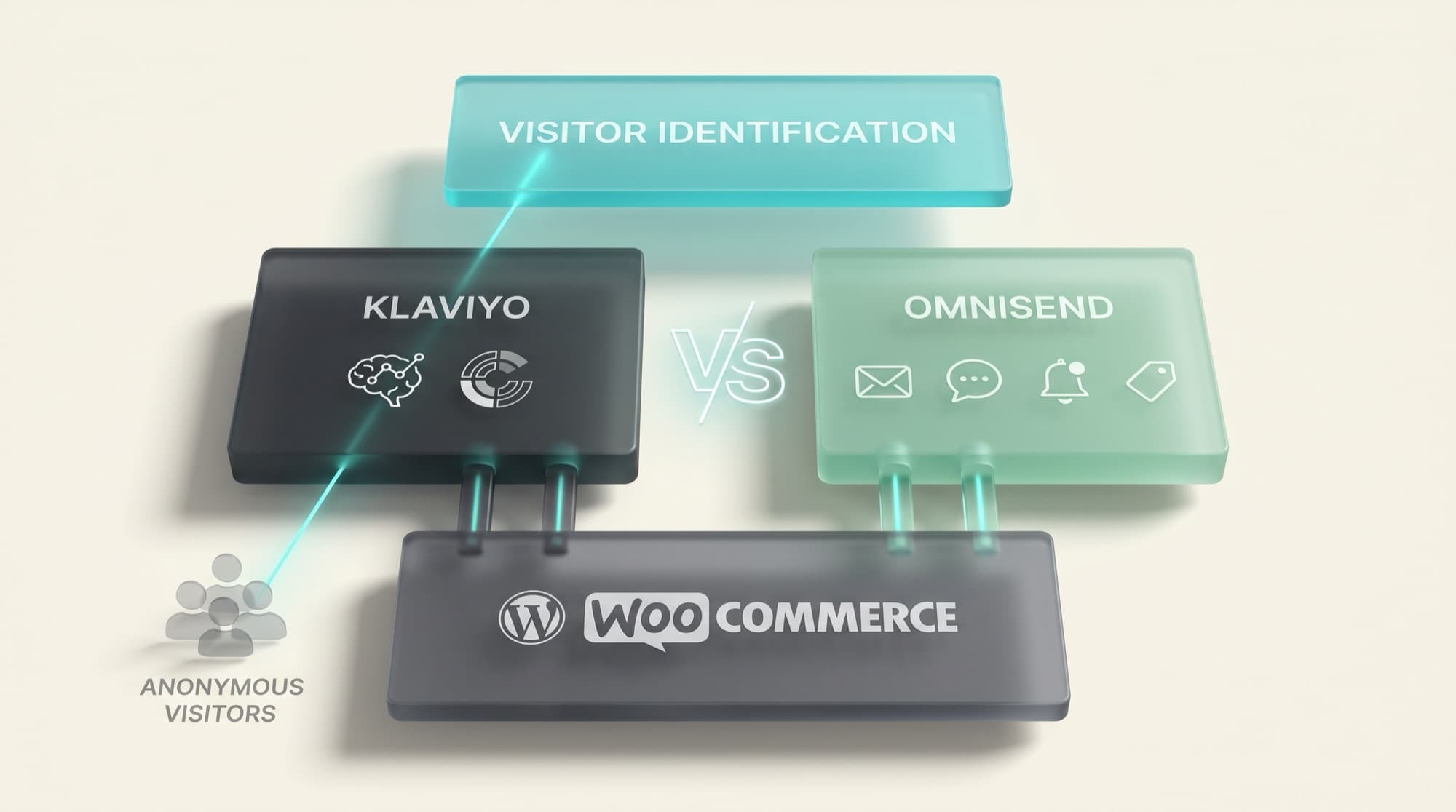
Klaviyo and Omnisend are the two leading ecommerce-native email platforms, and every comparison ranking for them is written for Shopify. This is the WooCommerce-specific version: where Klaviyo's depth and predictive AI win, where Omnisend's ease, price, and multichannel win, how each integrates with WooCommerce, and the one limitation both share that no ESP comparison mentions, the anonymous traffic neither can email.

AI Email Marketing for WooCommerce: What's Working in 2026
Every AI email marketing guide is the same generic list of tools and the same promise: personalize, optimize send times, write copy faster. Useful, but none of it is specific to WooCommerce, and none of it addresses the lever that matters most. This guide covers what AI genuinely does for a WooCommerce store's email today, what is overhyped, where it is heading with agentic commerce, and why the biggest AI win is not better copy but expanding who you can email in the first place.
WooCommerce Email List Growth: Turning Anonymous Traffic Into Subscribers
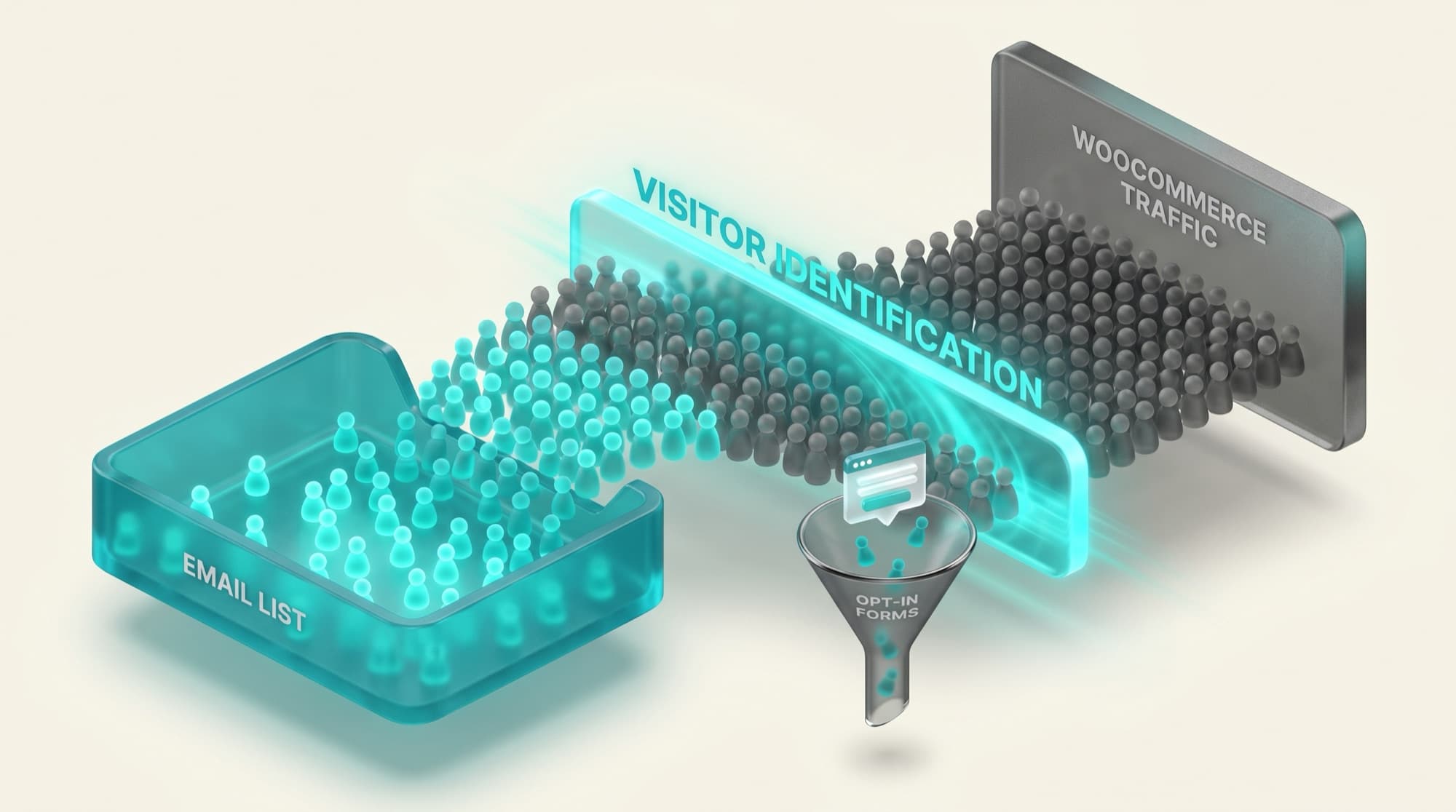
Every list-growth guide gives you the same advice: popups, forms, lead magnets, opt-in at checkout. It works, but it only captures the small share of visitors who choose to hand over an email, and on a WooCommerce store running paid traffic that is the minority. This guide covers both halves of WooCommerce list growth: how to do opt-in capture well, and the bigger lever almost nobody mentions, identifying the anonymous traffic that browses and leaves without ever filling out a form.
FluentCRM vs Groundhogg for WooCommerce: The WordPress-Native Automation Route
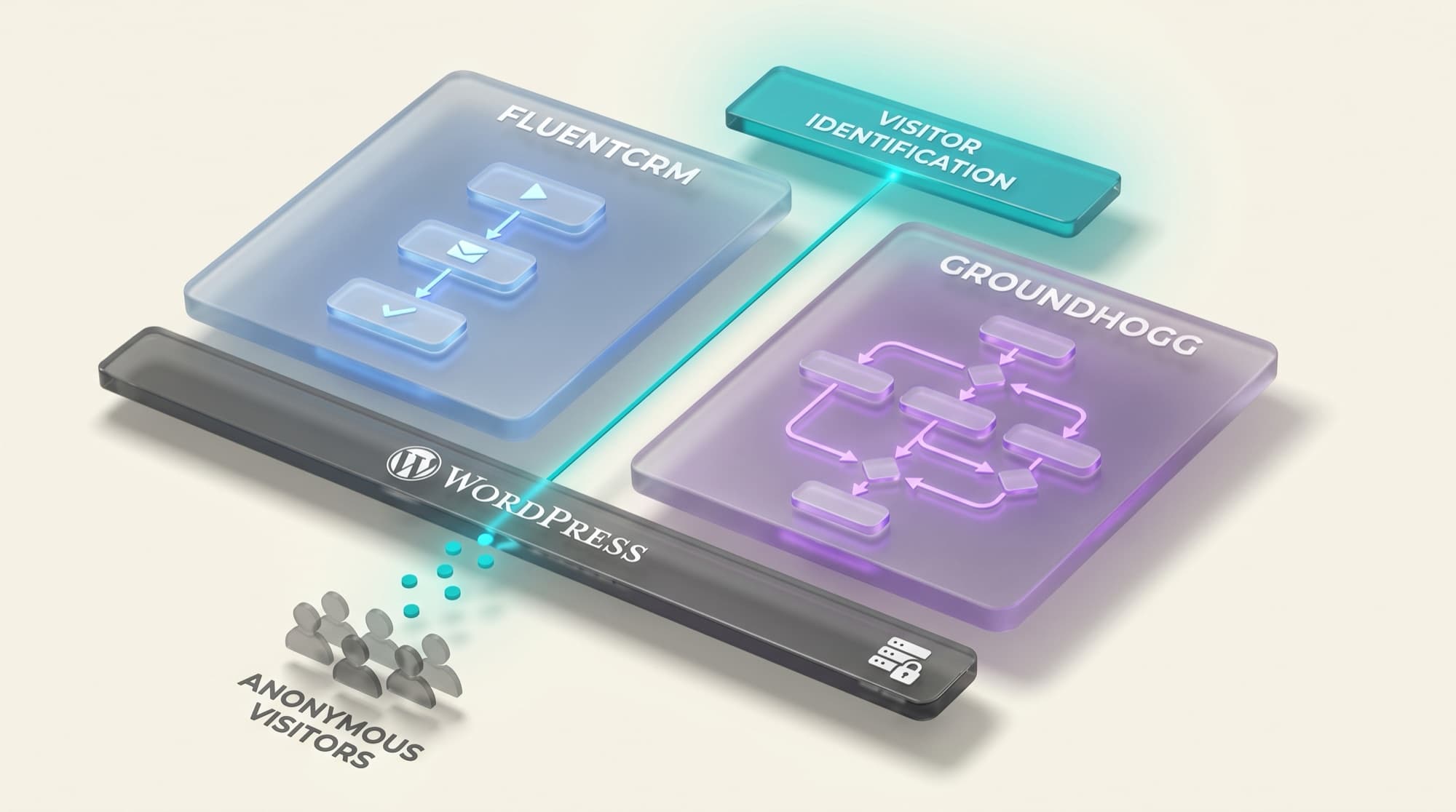
If you want to run WooCommerce email automation inside WordPress instead of renting a SaaS ESP, FluentCRM and Groundhogg are the two real choices, and most of the comparisons ranking for them are years old or written by one of the vendors. This is an honest, WooCommerce-focused head-to-head: where each one wins, how they handle store data and sending, where AutomateWoo and FunnelKit fit, and the one thing neither the WordPress-native route nor any CRM does on its own.
WooCommerce CRM: Do You Need One, and Which Kind?
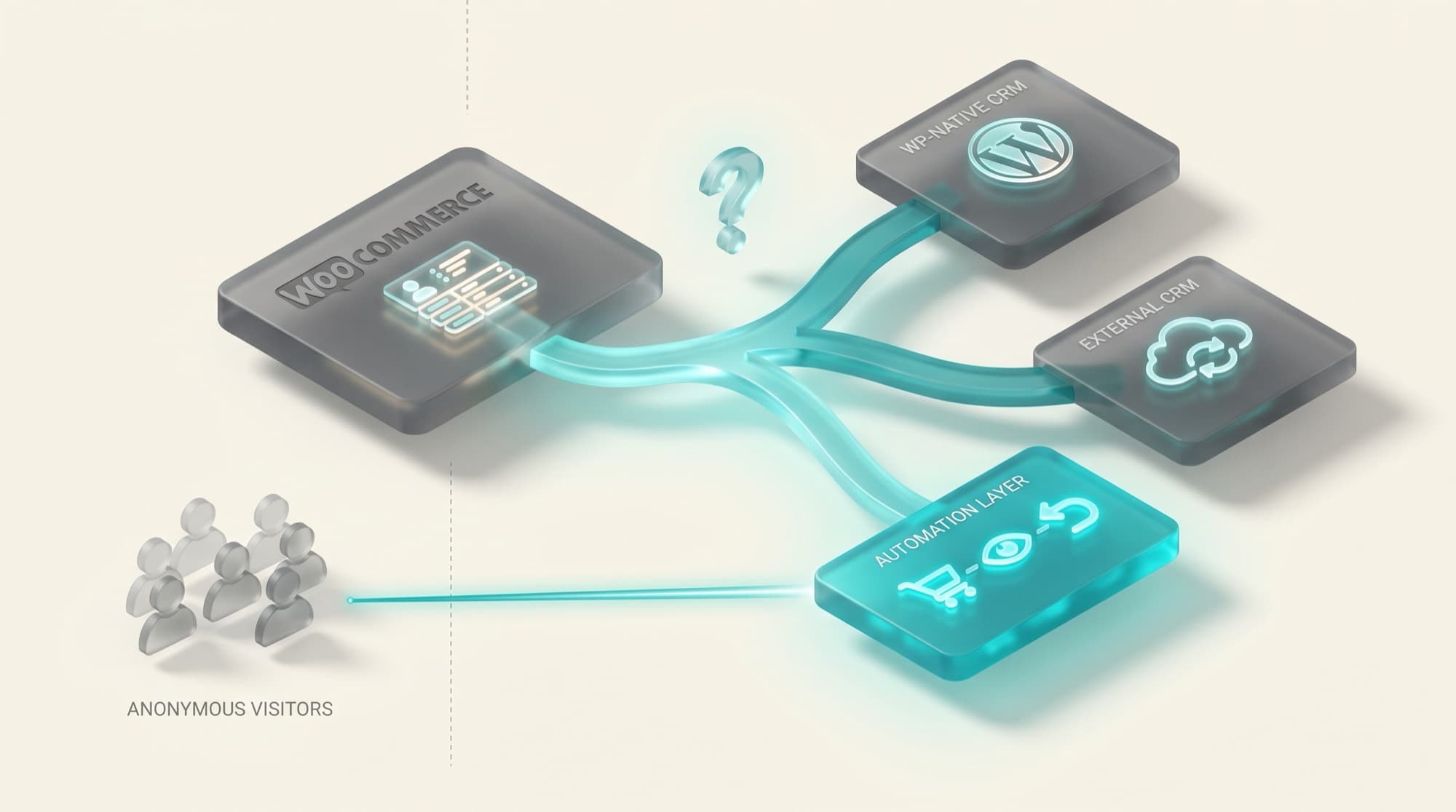
A search for "woocommerce crm" returns a dozen tools and almost no help deciding whether you need one. WooCommerce already stores your customer and order data, so the real question is not which CRM but whether you need a sales CRM at all, or just customer data plus marketing automation. This guide covers what a CRM actually is, the three kinds for WooCommerce (WordPress-native, external platforms, and the automation layer), whether your store needs one, and the customers every CRM misses.
WooCommerce Abandoned Cart Recovery: The 2026 Playbook
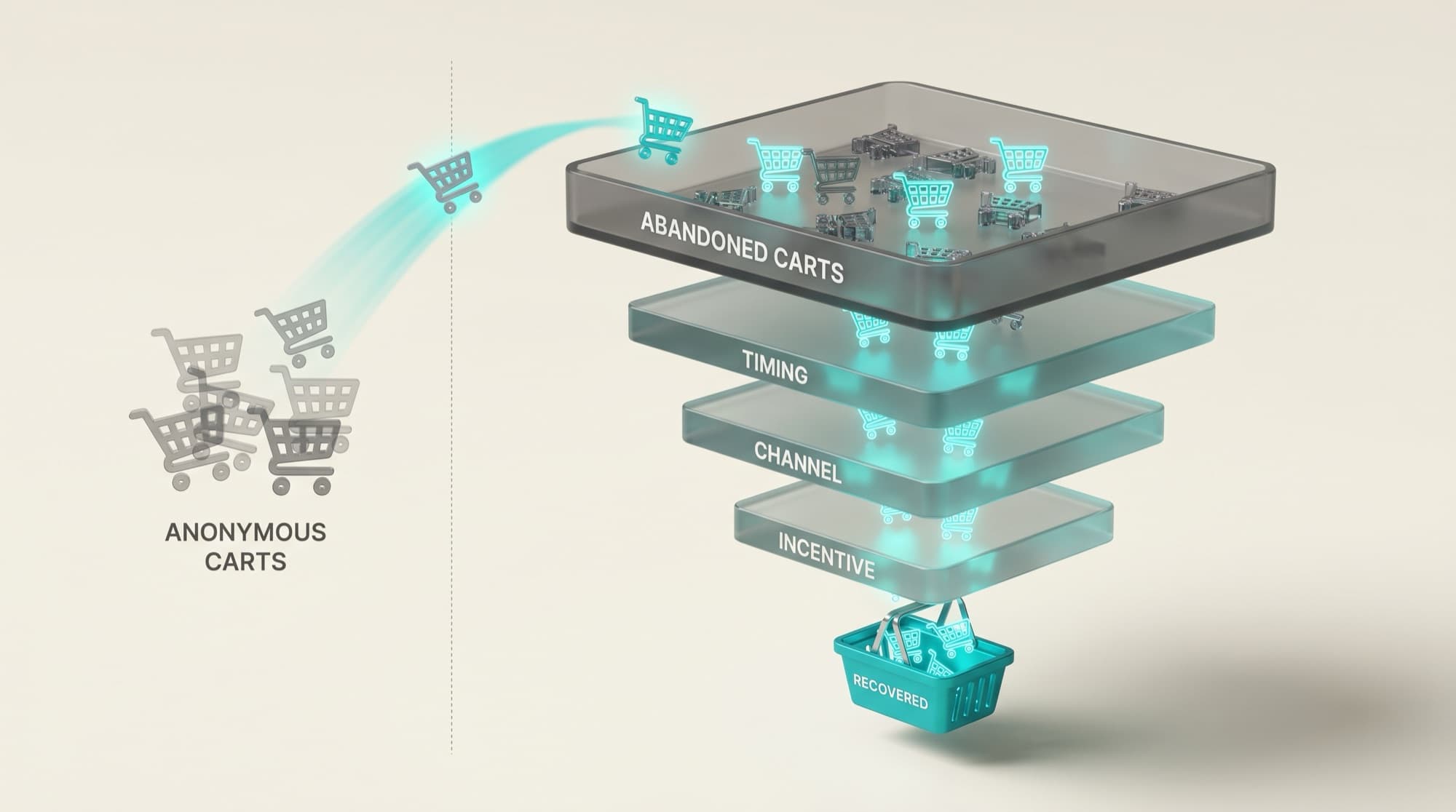
Installing an abandoned cart plugin is step zero, not the playbook. Recovering more carts comes from the recovery rate, and the levers most WooCommerce stores never touch: trigger timing and sequence depth, the email-and-SMS channel mix, incentive strategy that does not train discount-hunting, and the biggest leak of all, the anonymous and guest carts a plugin tied to known customers never sees. This is the 2026 recovery-rate playbook, and where it sits on top of the cart tools you already run.
WooCommerce Email Notifications and Templates: The Complete 2026 Setup Guide
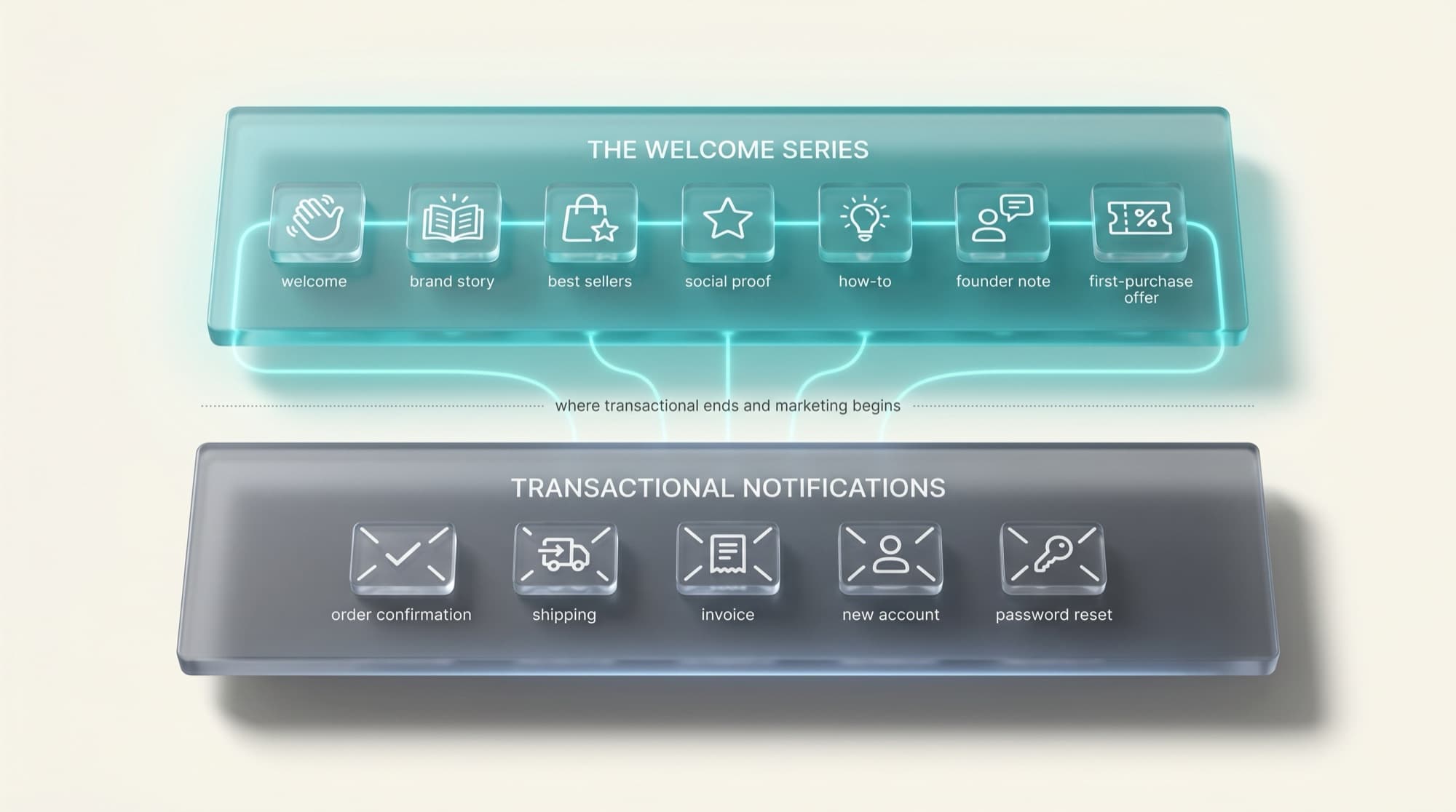
WooCommerce ships with about a dozen transactional email notifications and a basic template editor, and most stores never get past configuring them. This guide covers all of it: the default notifications, the Settings > Emails tab, customizing and overriding templates, and why your emails land in spam or never send. Then it covers the part almost no store sets up: the welcome series, the seven-email sequence that turns a first-time buyer into a repeat customer.
Top 10 WooCommerce Email Automation Tools in 2026 (ESP-Locked vs ESP-Agnostic)
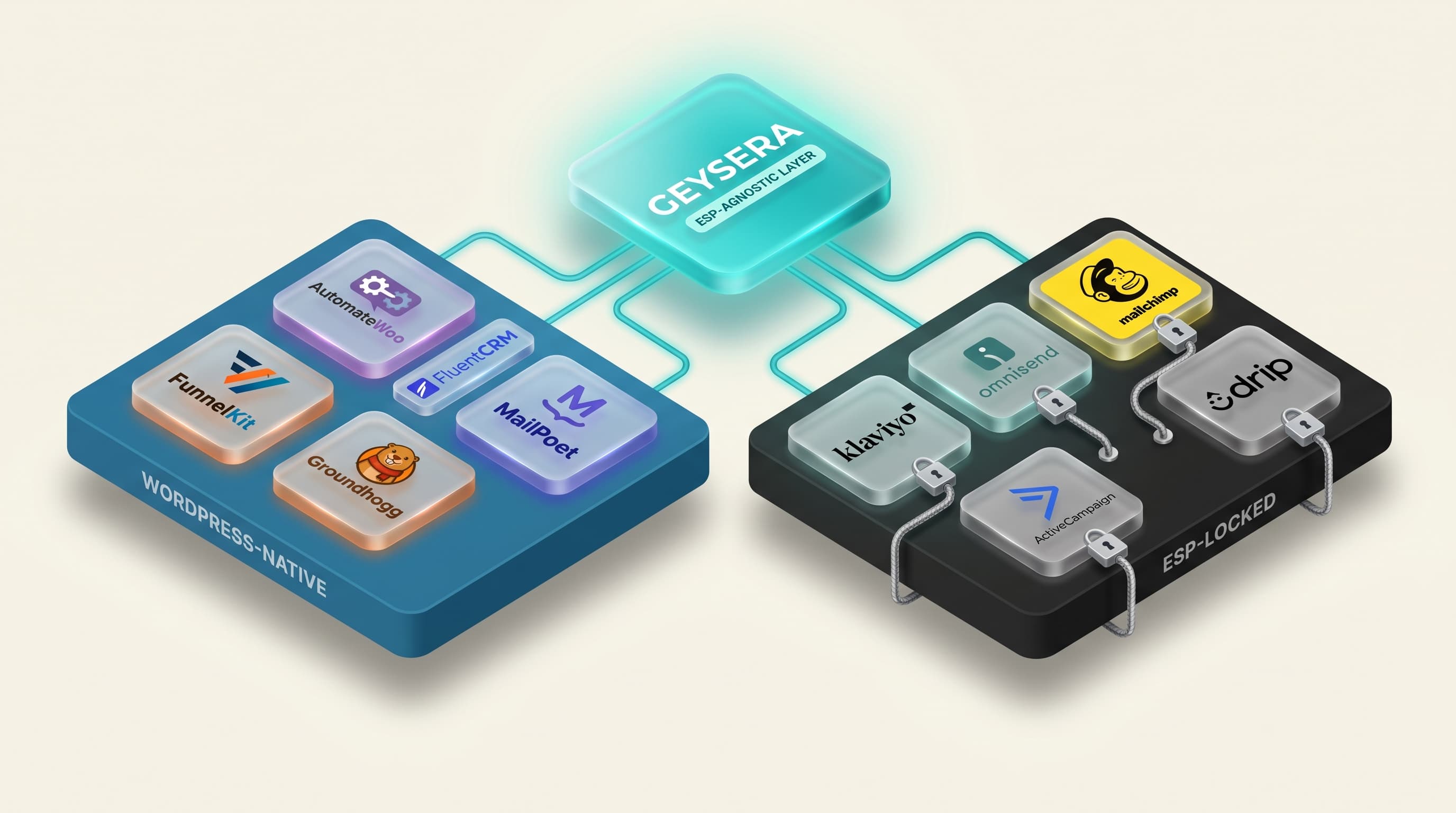
Most "best WooCommerce email tool" lists name the same three or four cloud platforms and skip the question that actually changes your bill and your reach: is the automation locked to a sending platform, or does it work on top of the one you already use? This is the 2026 list split that way, ten tools across WordPress-native and ESP-locked, plus the ESP-agnostic layer that adds the flows and the anonymous-traffic recovery none of them handle.

Mailchimp vs Klaviyo for WooCommerce in 2026 (and a Third Option: Keep Your ESP, Add a Layer)
Every Mailchimp vs Klaviyo guide reaches the same verdict (Klaviyo for ecommerce depth, Mailchimp for simplicity), and almost none are about WooCommerce. This is the WooCommerce-specific comparison: where each tool wins, the gap they both share, and a third option. For many stores the best move is to keep the ESP they have and add an automation layer on top.

Klaviyo for WooCommerce in 2026: The Visitor-ID Gap (and How to Close It)
Klaviyo runs some of the best email and SMS flows in ecommerce, and on WooCommerce its cart, browse, and winback automations are genuinely strong. Its real limitation is not a flow it cannot build. It is the traffic it cannot see: Klaviyo only fires flows for visitors it can identify, and on a paid-acquisition store roughly 95% of ad traffic never does. Here is how to close the visitor-ID gap by feeding Klaviyo the anonymous traffic it is missing, without switching tools.
Mailchimp for WooCommerce in 2026: The Limits, and What to Add Around It
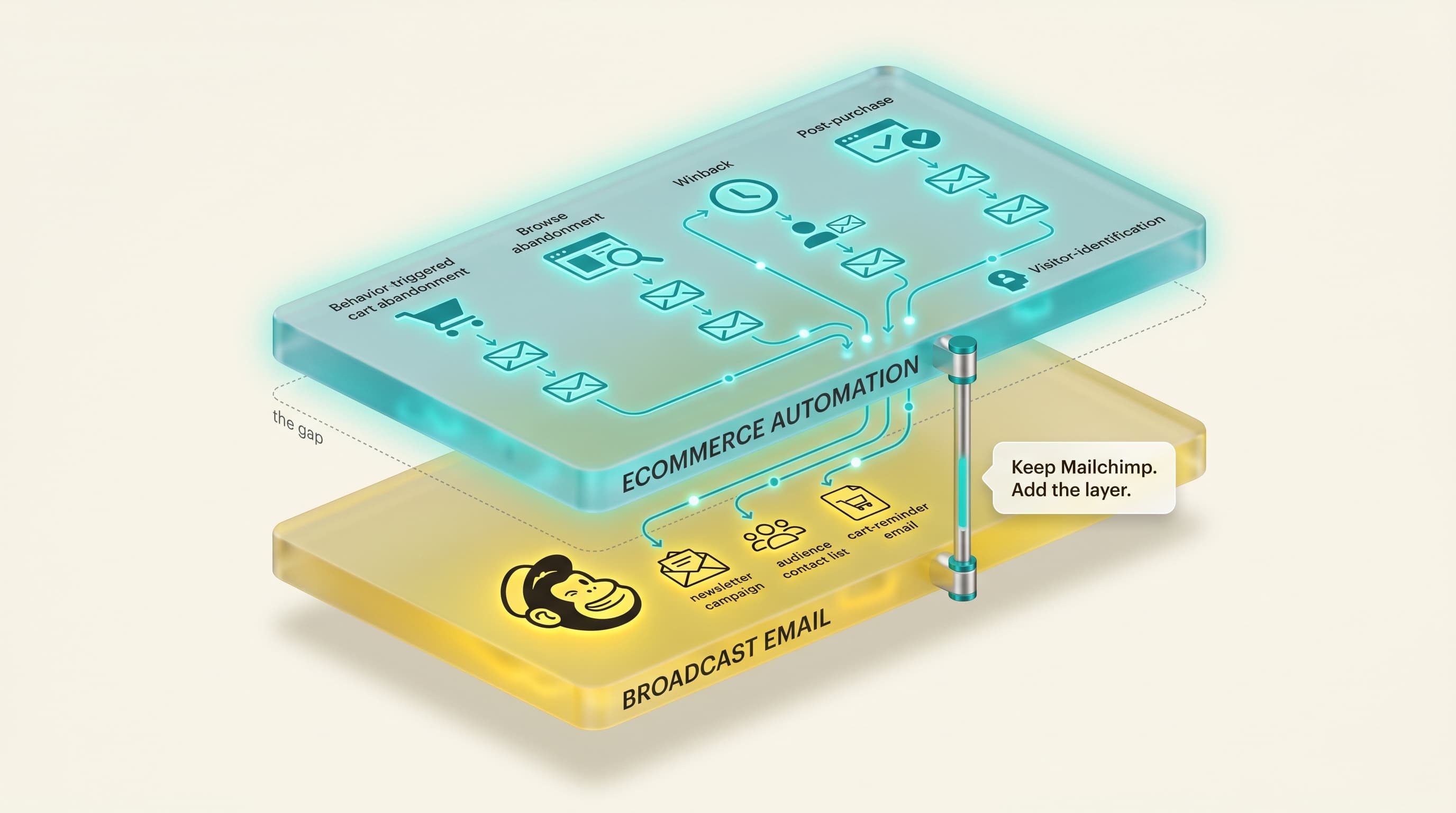
Mailchimp for WooCommerce is the most-installed way to connect a store to email, and it is fine for broadcast newsletters. But its ecommerce automation is intentionally shallow: cart recovery is template-driven, browse abandonment barely exists, winback is a generic blast, and big syncs slow the backend down. Here is exactly what Mailchimp can and cannot automate on WooCommerce, why it is built that way, and what to add around it without migrating off the tool your team already knows.
WooCommerce HubSpot Integration in 2026: What It Won't Do
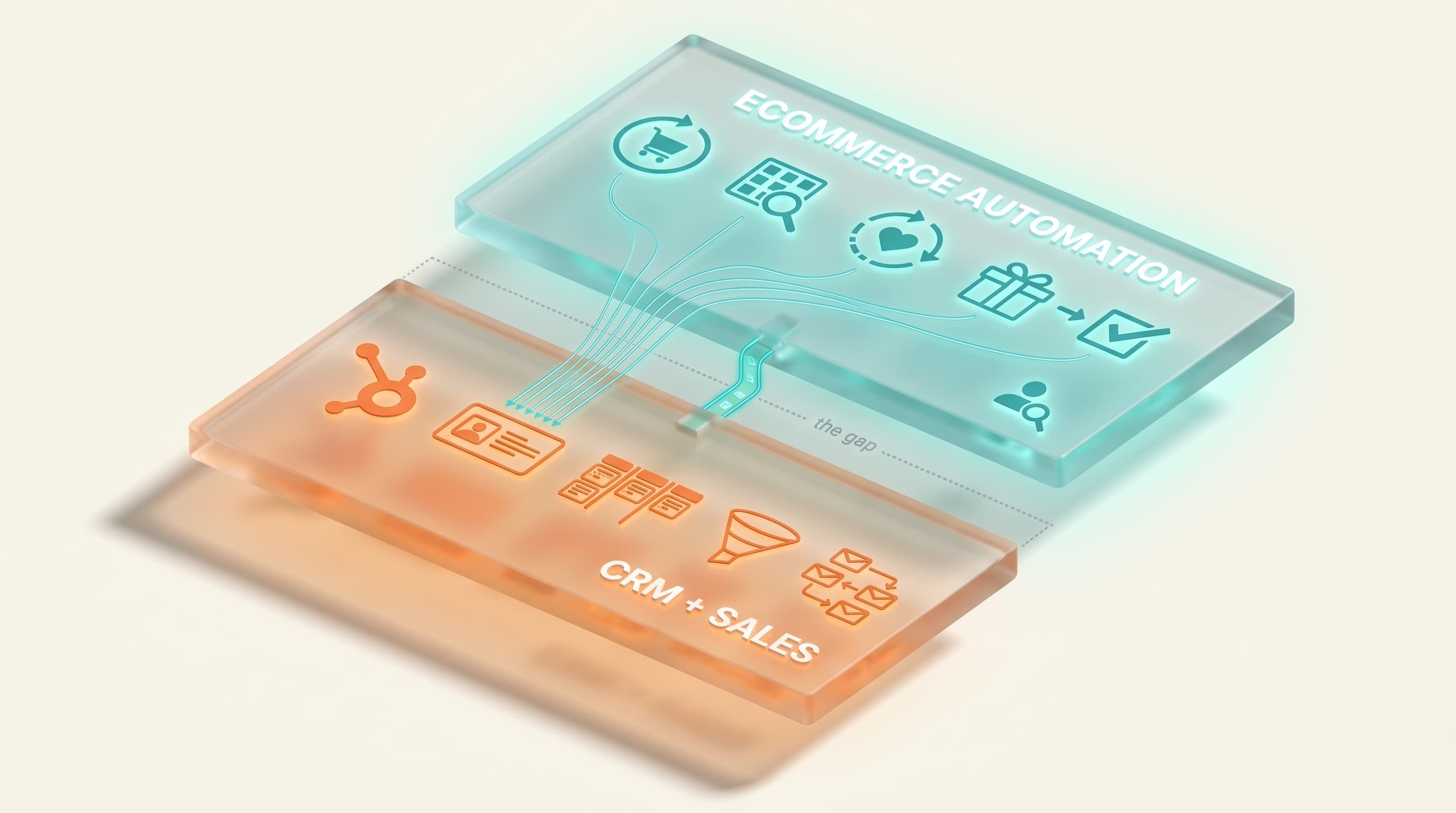
HubSpot is one of the best CRMs a WooCommerce store can run, but its ecommerce automation is thin and bolted on through a sync. The whole first page of Google for "woocommerce hubspot" is connector plugins, none of which answer what to do after the data lands in HubSpot. Here is why WooCommerce stores choose HubSpot, where its cart, browse, and winback automation falls short, and how to add the missing ecommerce layer without leaving the CRM you already pay for.