Abandoned Cart Email
Abandoned cart email sequences, timing, discounts and subject lines, with cart abandonment benchmarks and setup guides for Klaviyo, Shopify and WooCommerce.
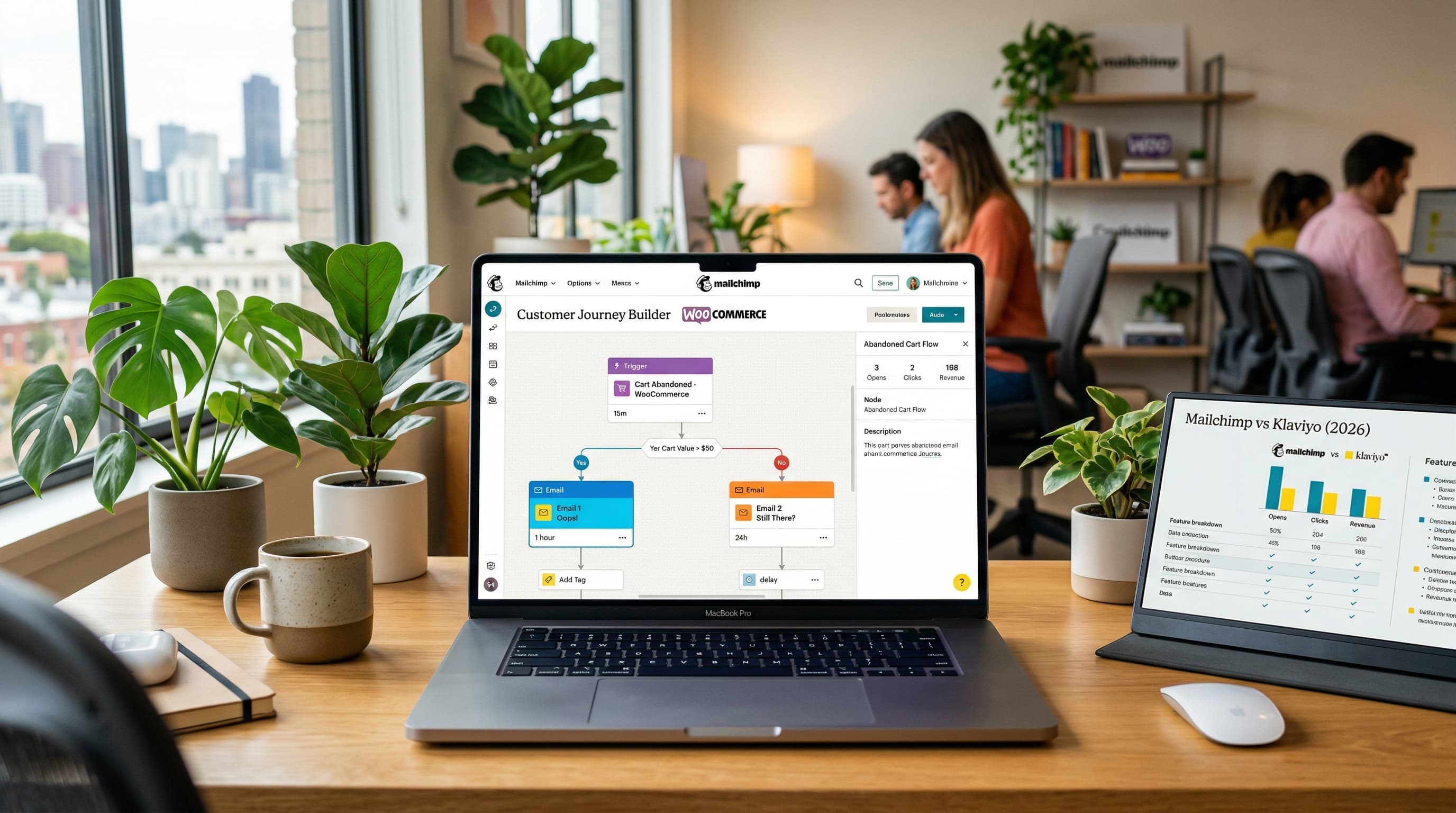
Mailchimp Abandoned Cart Email for WooCommerce: Setup and Plugin Guide (2026)
Most cart recovery guides assume Shopify and Klaviyo. If you are on WooCommerce and Mailchimp, the advice gets thin. Mailchimp can run a three-email flow — but you need the Standard plan, and the setup has traps. Caching plugins silently kill cart tracking. Guest checkout goes untracked unless the JS loads right. The automation sometimes connects to staging instead of production. Full setup, the five things that break it, and when Mailchimp is enough vs. when you have outgrown it.
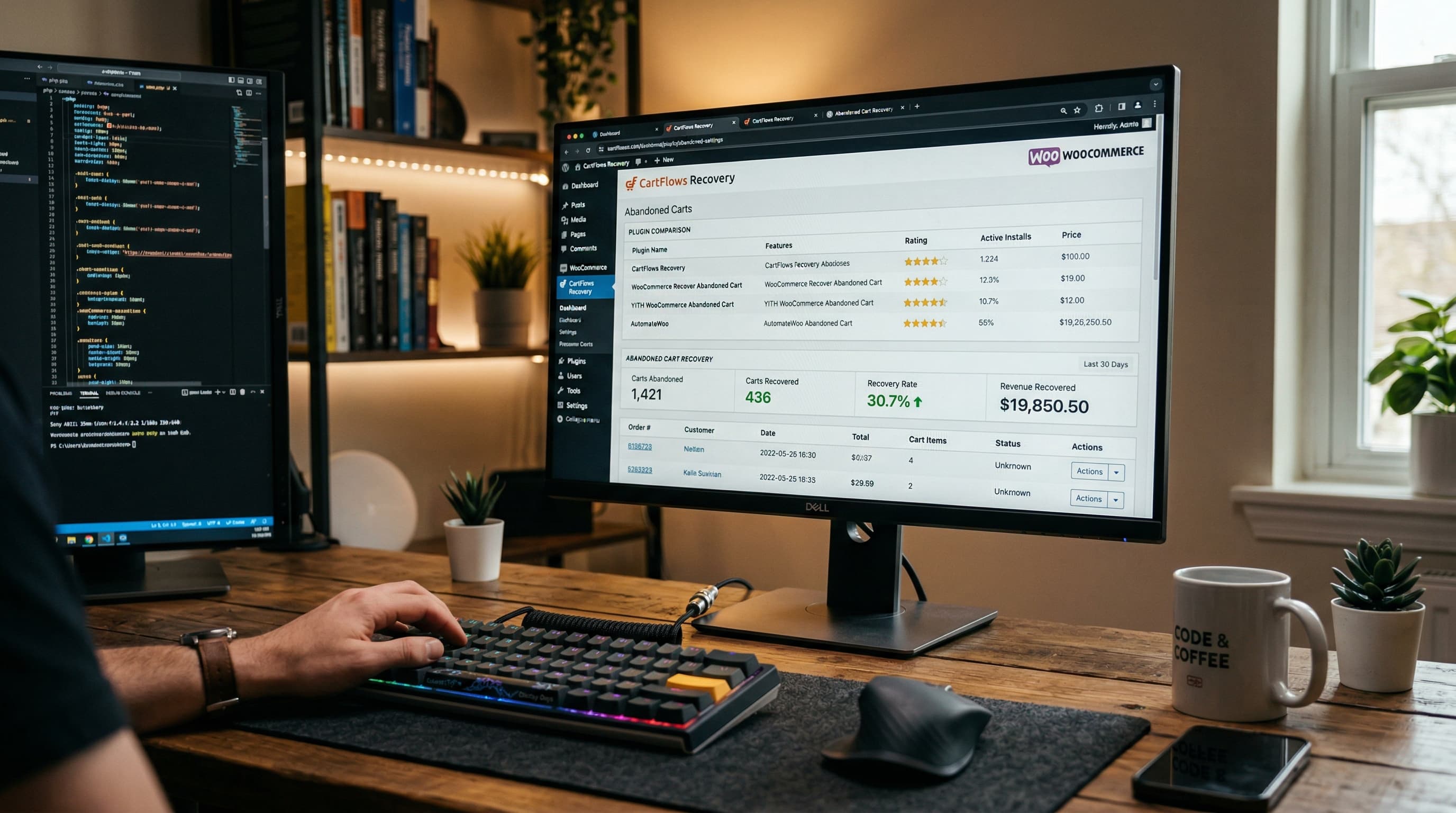
WooCommerce Abandoned Cart Email: Complete Setup and Plugin Guide for 2026
WooCommerce has no built-in cart recovery and most advice assumes Shopify. The free Cart Abandonment Recovery plugin gets a three-email flow running in 5 minutes. AutomateWoo ($119/yr) adds Klaviyo-level logic inside WordPress. Or skip plugins and connect your ESP. The catch: caching plugins silently break cart tracking, and guest checkout goes untracked by default — 70-80% of shoppers invisible. Full setup for both paths plus the WooCommerce-specific fixes nobody warns you about.
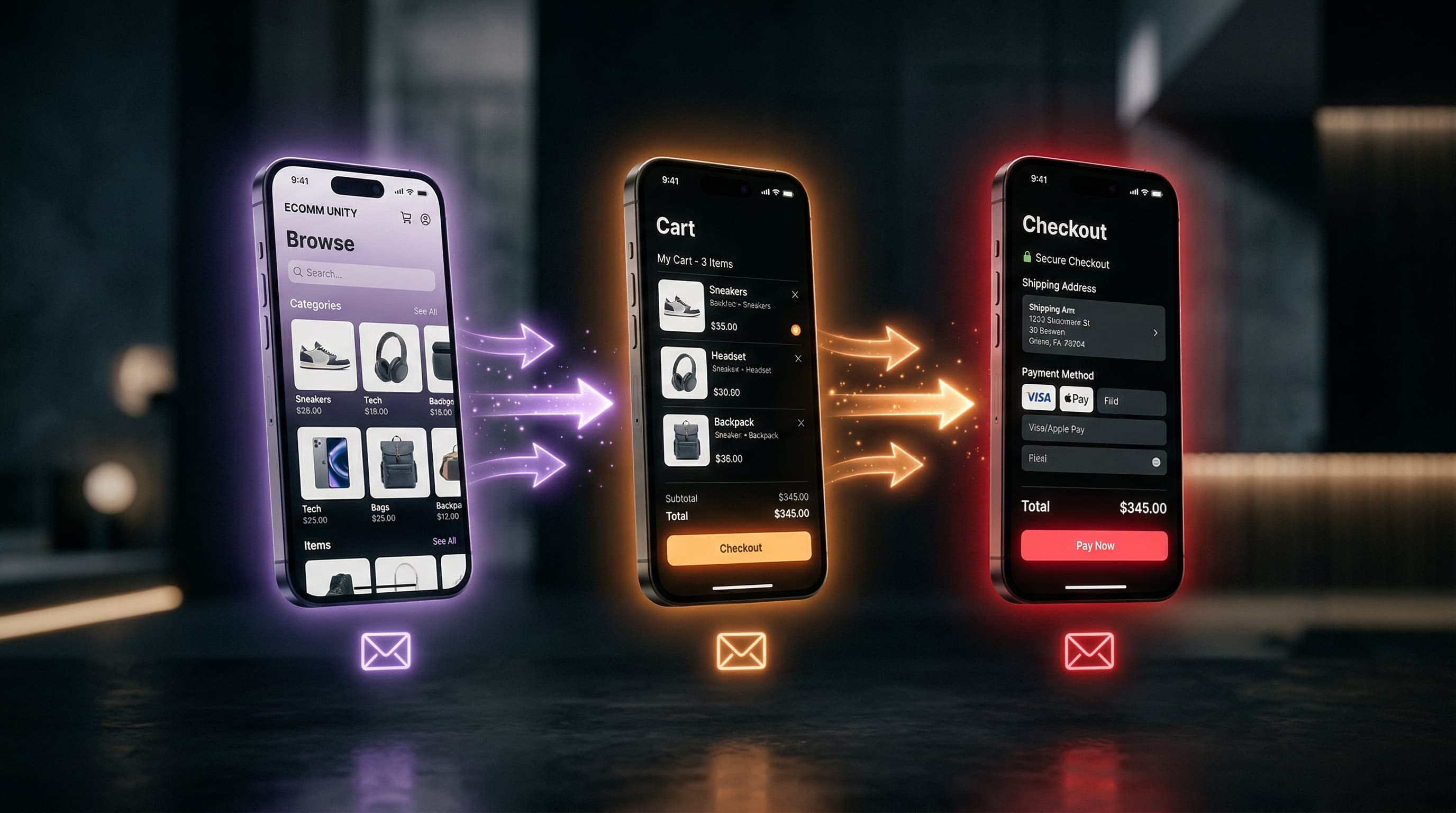
Browse Abandonment vs. Cart Abandonment vs. Checkout Abandonment: The Complete Email Recovery Playbook
Most stores run one abandonment flow and miss two-thirds of the funnel. Browse abandonment catches window shoppers who never carted (1-3% conversion, massive volume). Checkout abandonment catches people who entered payment info and bailed (10-15%). Stack all three with suppression and a store doing $15K/month in cart recovery jumps to $33K. The trick is frequency capping so nobody gets 8 emails about the same product. Full playbook for running all three flows without over-emailing.
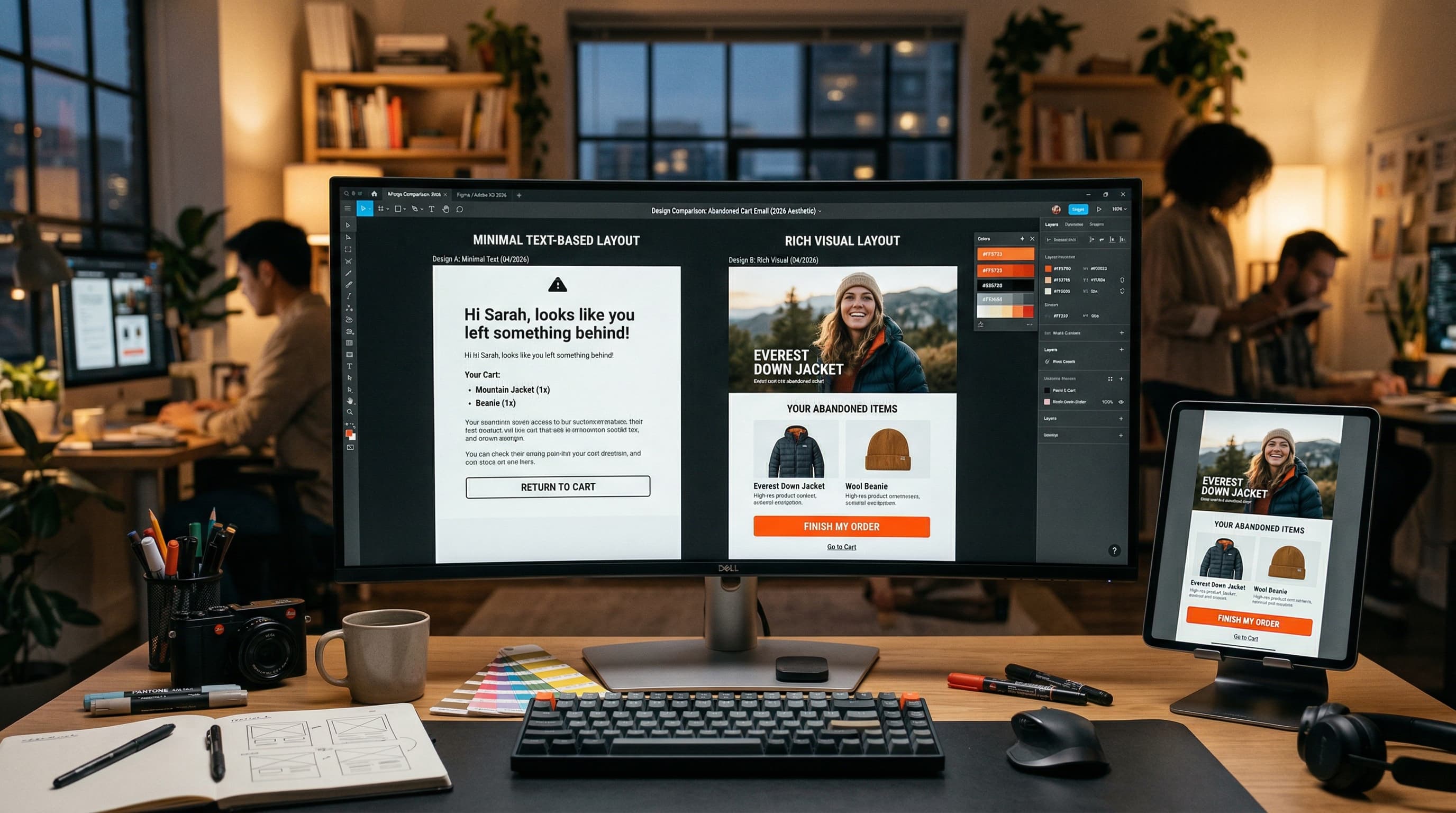
Abandoned Cart Email Design: Templates, Layout, and CTA Best Practices for 2026
The cart emails that look best often perform worst. Hero banners, lifestyle photos, recommendation grids — beautiful, terrible for conversions. The emails recovering 3x more carts are simple: one large product image, one CTA above the fold, under 150 words. 80% of abandonment is mobile, so single-column and 44px tap targets are not optional. Dark mode breaks 39% of inboxes if you skip testing. CTA button design, mobile templates, and layout by brand type — luxury to DTC to B2B.

How to Set Up Abandoned Cart Emails in Klaviyo + Shopify: The Complete Flow Guide
Klaviyo's default abandoned cart flow ships with one email at whatever timing the platform set. That recovers about half of what it should. The fix: three emails across two flows. Started Checkout for high-intent abandoners (30 min, 24 hrs, 48 hrs) and Added to Cart for browsers. Add conditional splits by cart value and customer type, disable Shopify's native email, and move from the $3.65 average RPR toward the $28.89 top 10%. Step-by-step setup with templates, splits, and A/B tests.

Abandoned Cart Email Discounts: When to Offer, What to Offer, and When to Hold Back
Half the industry says always discount. The other half says never. Both have data, both are partly wrong. Free shipping converts 2x better than percentage off. At 80% margin, 10% off barely hurts. At 20%, it eats half your profit. The framework: no discount in email 1 (most recover at full price), value-adds in email 2, conditional incentive in email 3 only if the math works. Plus the margin calculator, discount alternatives, and how to stop training customers to abandon on purpose.
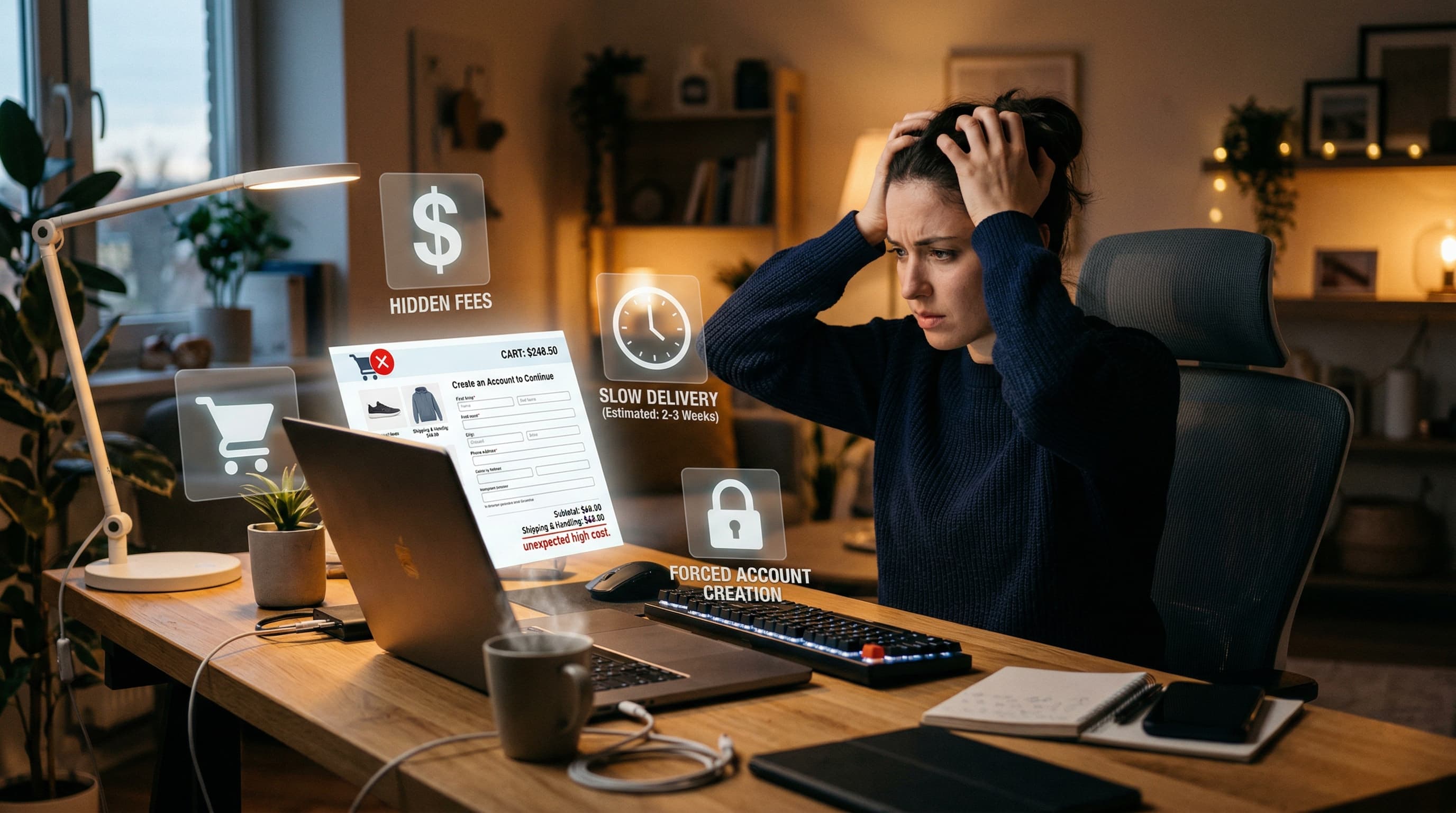
Why Customers Abandon Carts in 2026 (And How to Fix Every Reason)
Cart abandonment gets treated like one problem. It is not. A customer who left because shipping was $12 needs a different email than one who bounced at mandatory signup. Baymard tracked the reasons across 49 studies — unexpected costs (48%), just browsing (43%), forced accounts (26%), security fears (25%). Each has an on-site fix and an email fix. The stores hitting 10%+ recovery rates diagnose the reason first, then write the email. This covers both fixes for all seven reasons.
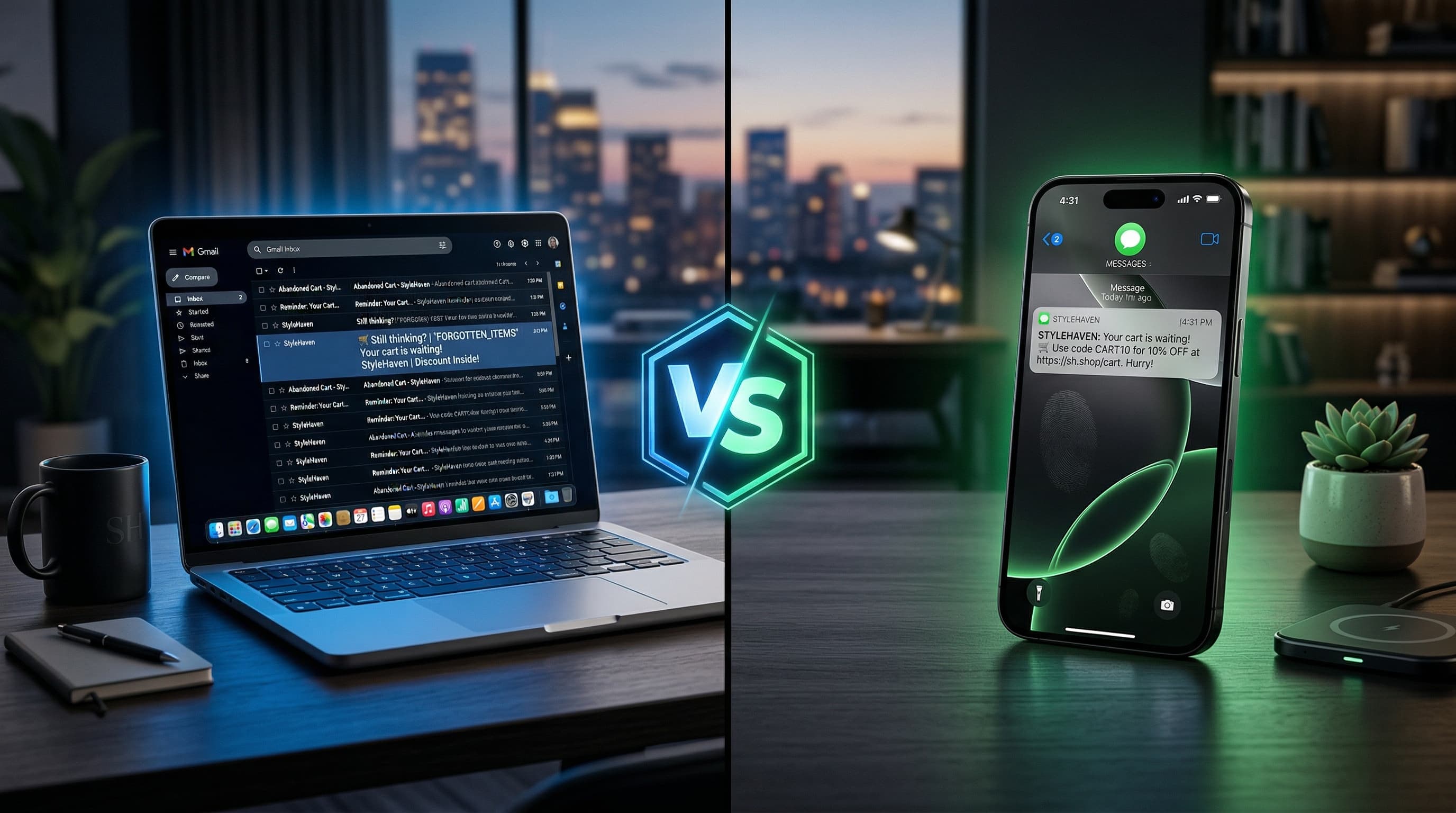
Abandoned Cart Email vs. SMS: Which Actually Recovers More Revenue in 2026?
SMS converts at 15-20%. Email converts at 5-10%. Easy call — until you check your SMS list. Most stores can only text 20-40% of abandoners, while email reaches everyone. Email still drives more total recovered revenue for most brands. The real play in 2026 is both: SMS at 15 minutes for speed, email at 1 hour for depth, alternating through 72 hours. Full timing playbook, cost per recovery math, and the TCPA rules that can cost you $1,500 per non-compliant text.
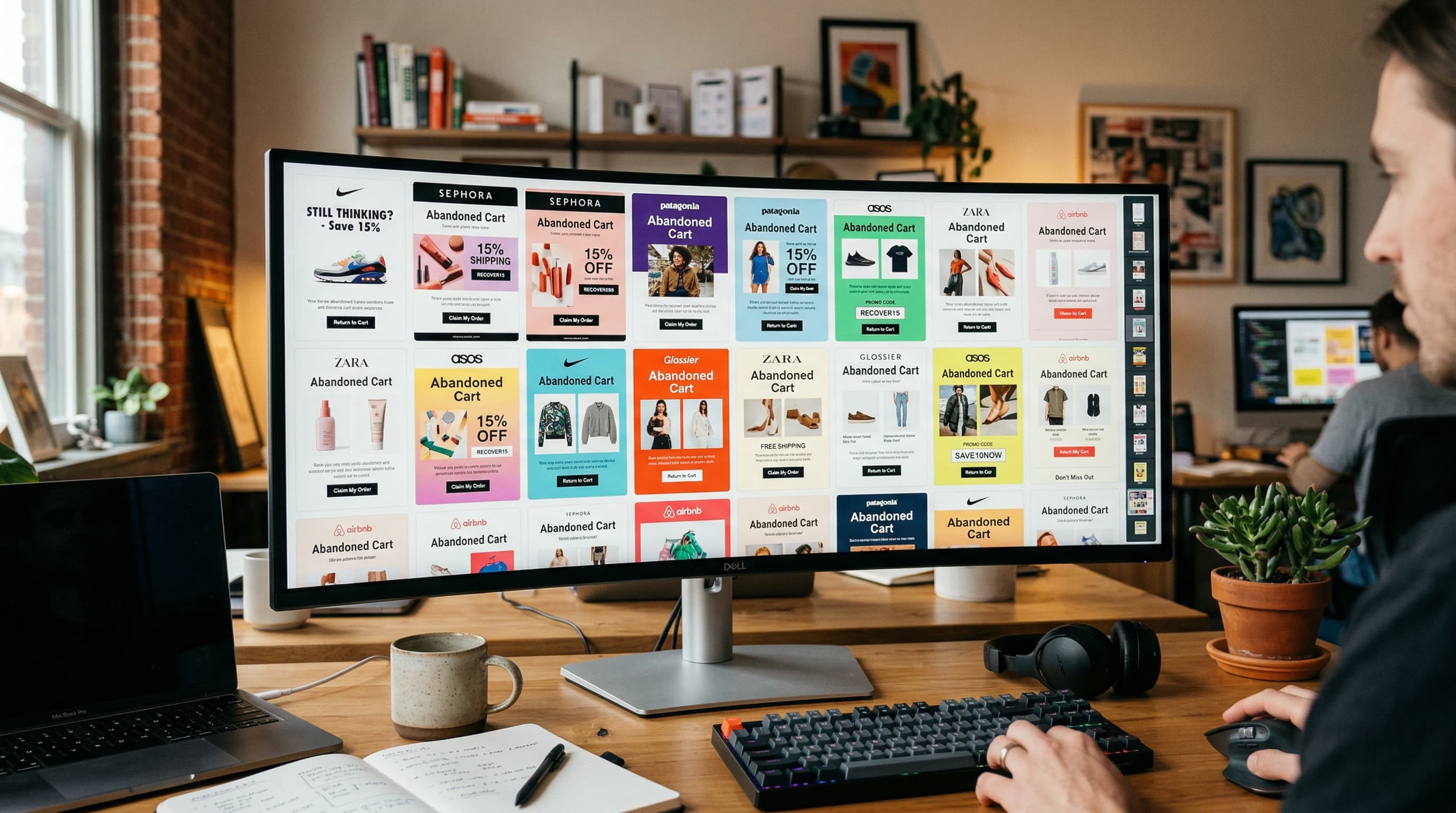
45+ Abandoned Cart Email Examples from Real Brands (With Teardowns)
We analyzed 45+ real cart recovery emails and found the same problem: brands pick one approach regardless of price point or sequence position. A clean reminder works for email 1. Social proof belongs in email 2. Discounts — if at all — go in email 3. Humor lands for casual DTC but tanks for luxury. Each example gets a full teardown: what works, what falls flat, and the strategy behind it. Sorted by approach, not industry, because that matters more.
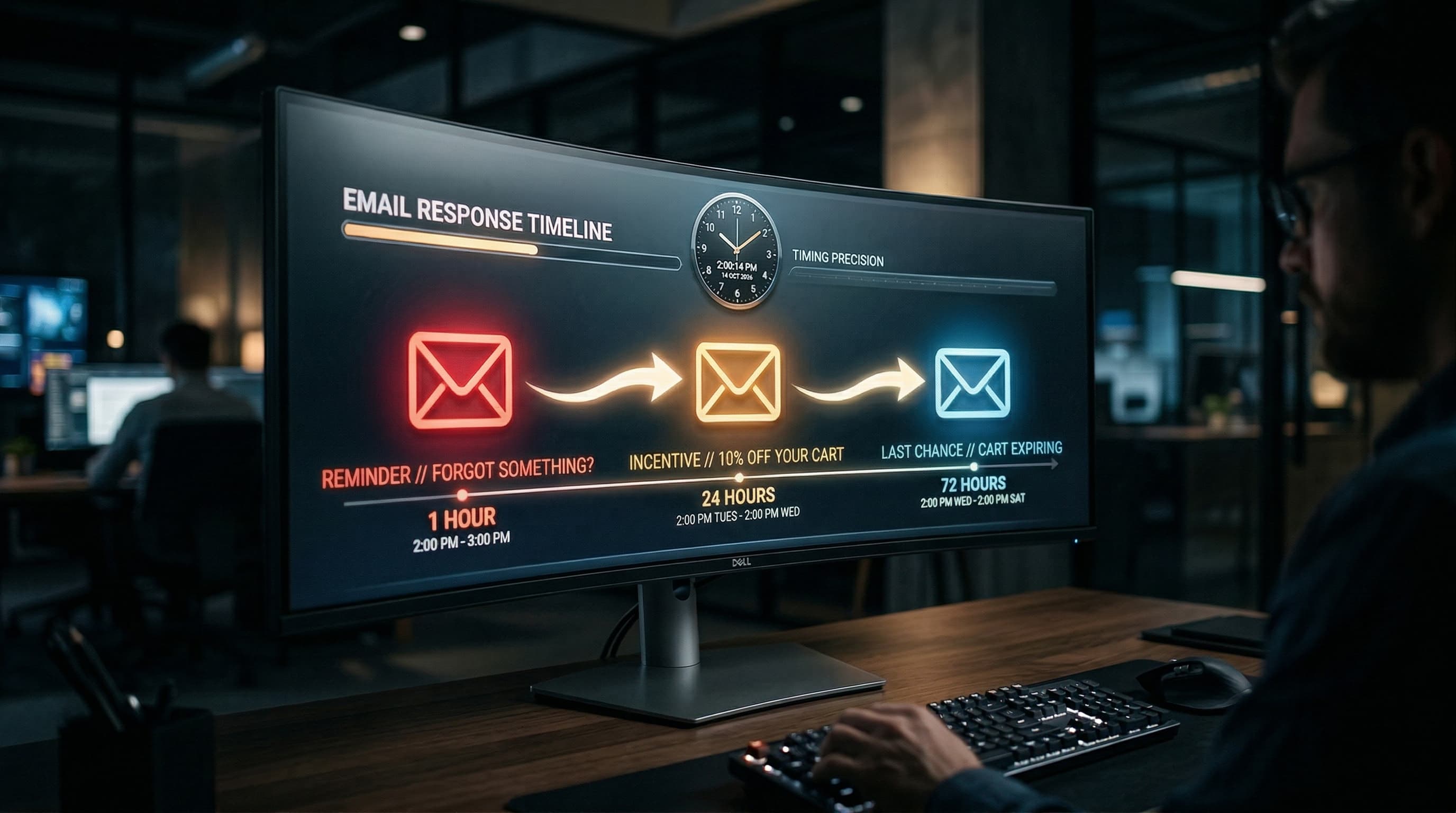
The Abandoned Cart Email Sequence: How Many Emails, What Timing, and Why Most Stores Get It Wrong
Most stores send one cart recovery email at whatever time their platform defaulted to. That alone costs them half their recoveries. The first email at 30 minutes converts 3-5x better than one sent four hours later. But timing is only part of it — each email needs a different job. Email 1 reminds. Email 2 handles objections with social proof. Email 3 closes with an incentive. Same message three times is not a sequence. Exact timing, content per email, and when to extend beyond three.