Email Marketing
Email marketing benchmarks by industry: open rates, click-through rates, deliverability, attribution and revenue per recipient, with the 2026 data behind each.
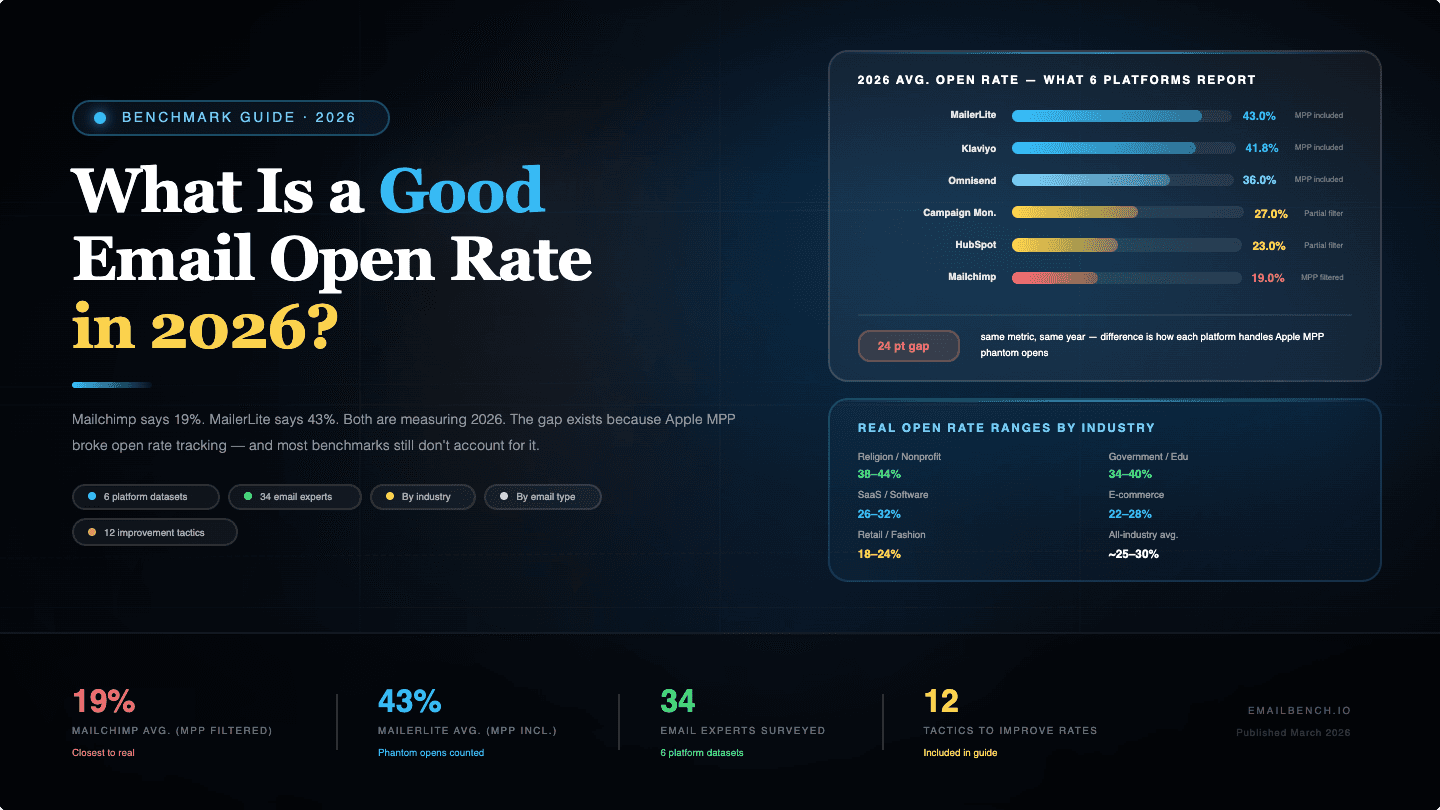
What is a good email open rate in 2026?
Mailchimp says the average open rate is 19%. MailerLite says 43%. Both are measuring 2026. The gap exists because Apple Mail Privacy Protection broke open rate tracking in 2021, and most benchmarks still don't account for it. This guide pulls data from 6 major platforms and 34 email experts to give you real benchmarks by industry, email type, and list size, plus 12 tactics to improve your numbers.
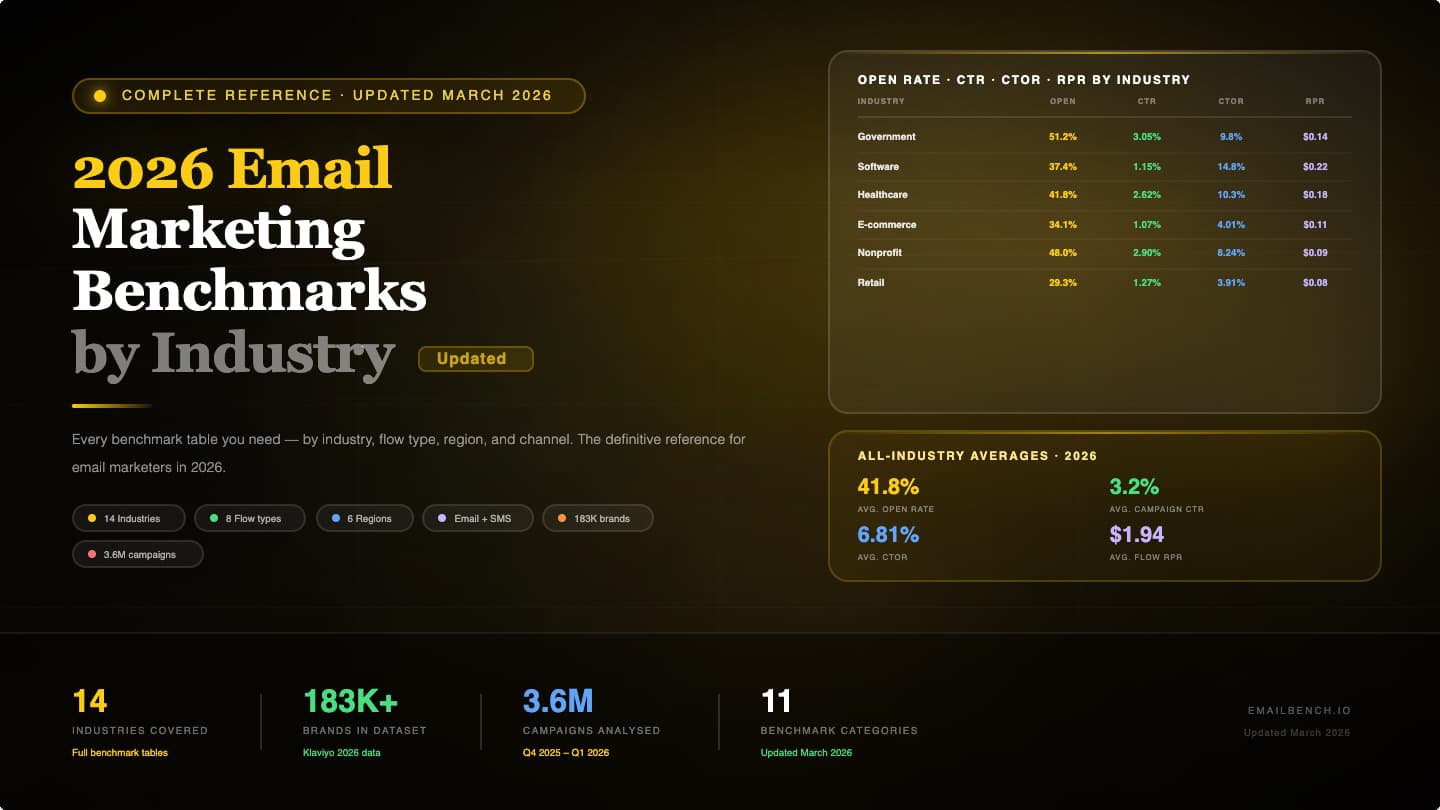
2026 Email Marketing Benchmarks by Industry: The Complete Reference [Updated April 2026]
Think your 31% open rate is bad? It depends on your industry — Religion hits 55.71%, Travel sits at 30.10%, and all of those numbers are inflated by 15-20 points anyway. This is the complete 2026 benchmark reference: 10 tables covering open rates, CTR, RPR, deliverability, regional data, SMS vs. email, AI impact, and send times — sourced from 183K+ brands and 3.6M campaigns. Bookmark it and stop Googling "average email open rate" every quarter.
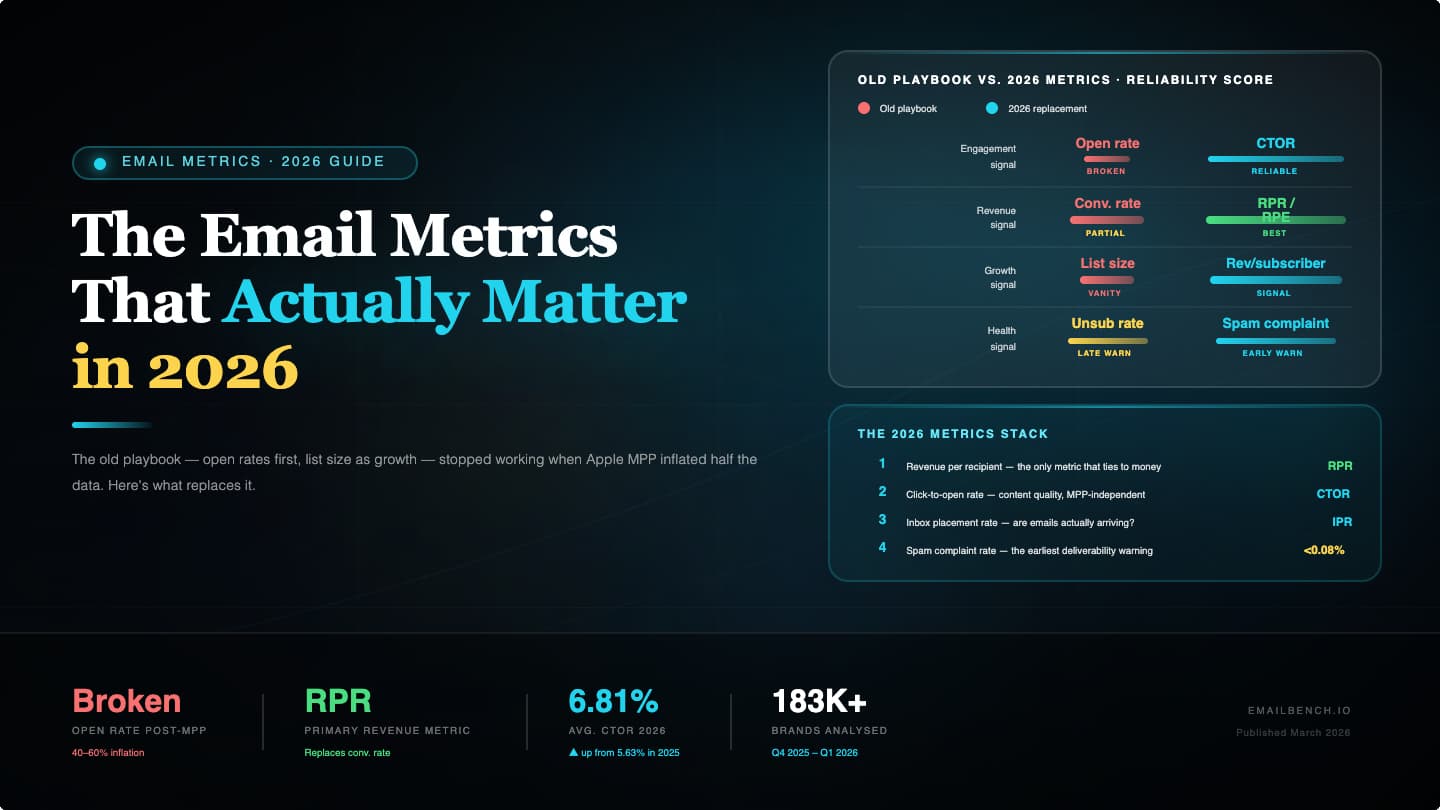
The email metrics that actually matter in 2026
Still reporting open rates first? That hierarchy stopped making sense when Apple MPP inflated half the data. This post lays out a four-tier metrics framework — Revenue, Engagement, Health, and Strategic — built from 183K+ brands and 25 industry experts. It replaces the old open-rate-first playbook with a system that starts where it should: at the money.
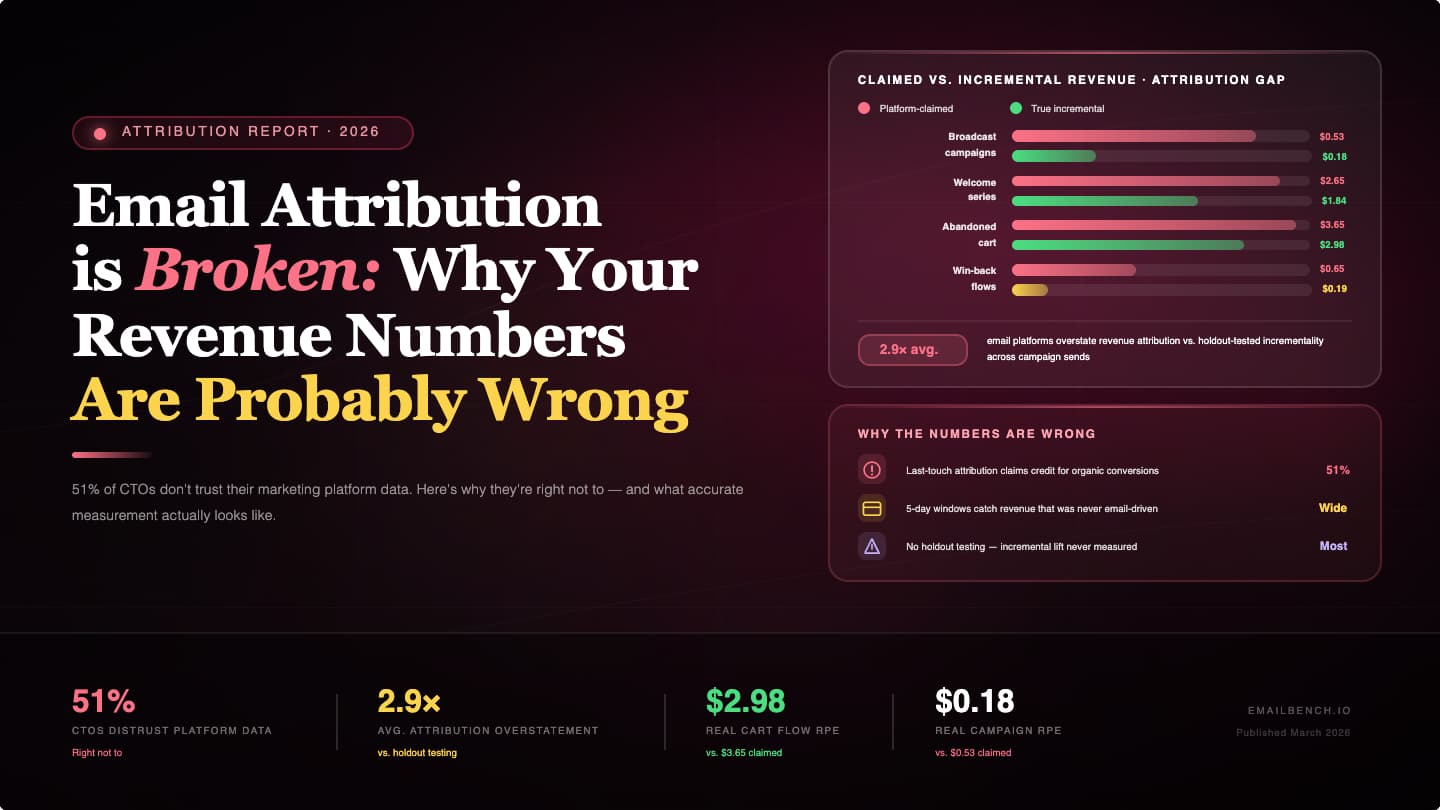
Email attribution is broken: why your revenue numbers are probably wrong
Your ESP says email generated $X this month. That number is almost certainly too high. Last-click attribution gives email 100% credit for purchases that involved multiple touchpoints, and an estimated $66 billion is wasted annually because of it. This post covers why 51% of CTOs don't trust their platform data, how incrementality testing reveals your real email impact, and what privacy regulation means for the tracking signals attribution depends on.
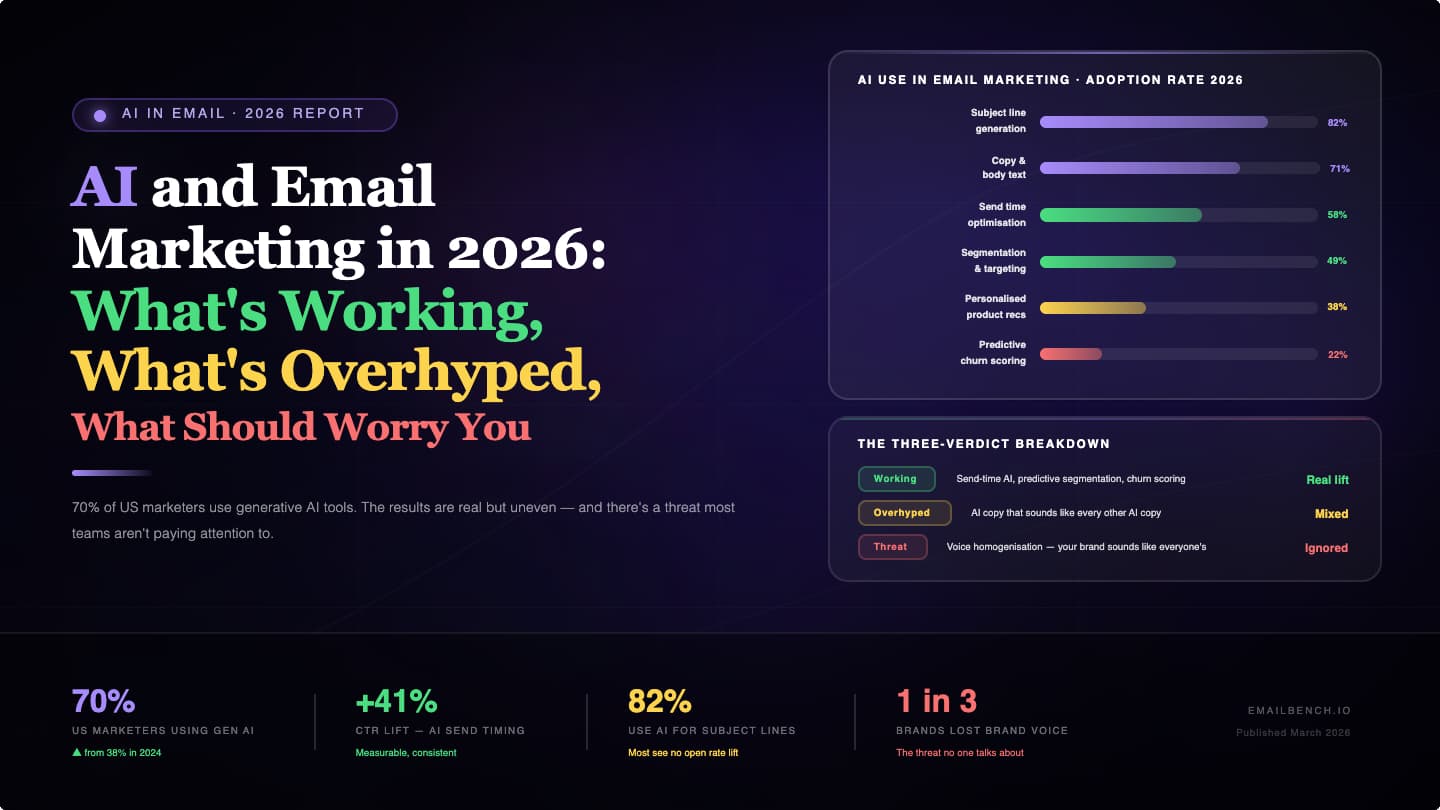
AI and email marketing in 2026: what's actually working, what's overhyped, and what should worry you
AI is improving email metrics in measurable ways — 22% higher open rates from optimized subject lines, 15-23% lift from send-time optimization, 82% conversion gains from 1:1 personalization. Production time has collapsed from weeks to days. But the same tools are making everyone's emails sound alike, and AI gatekeepers like Gmail's CC agent may soon summarize your emails before subscribers see them. The real question is what happens when optimization alone stops being a differentiator?
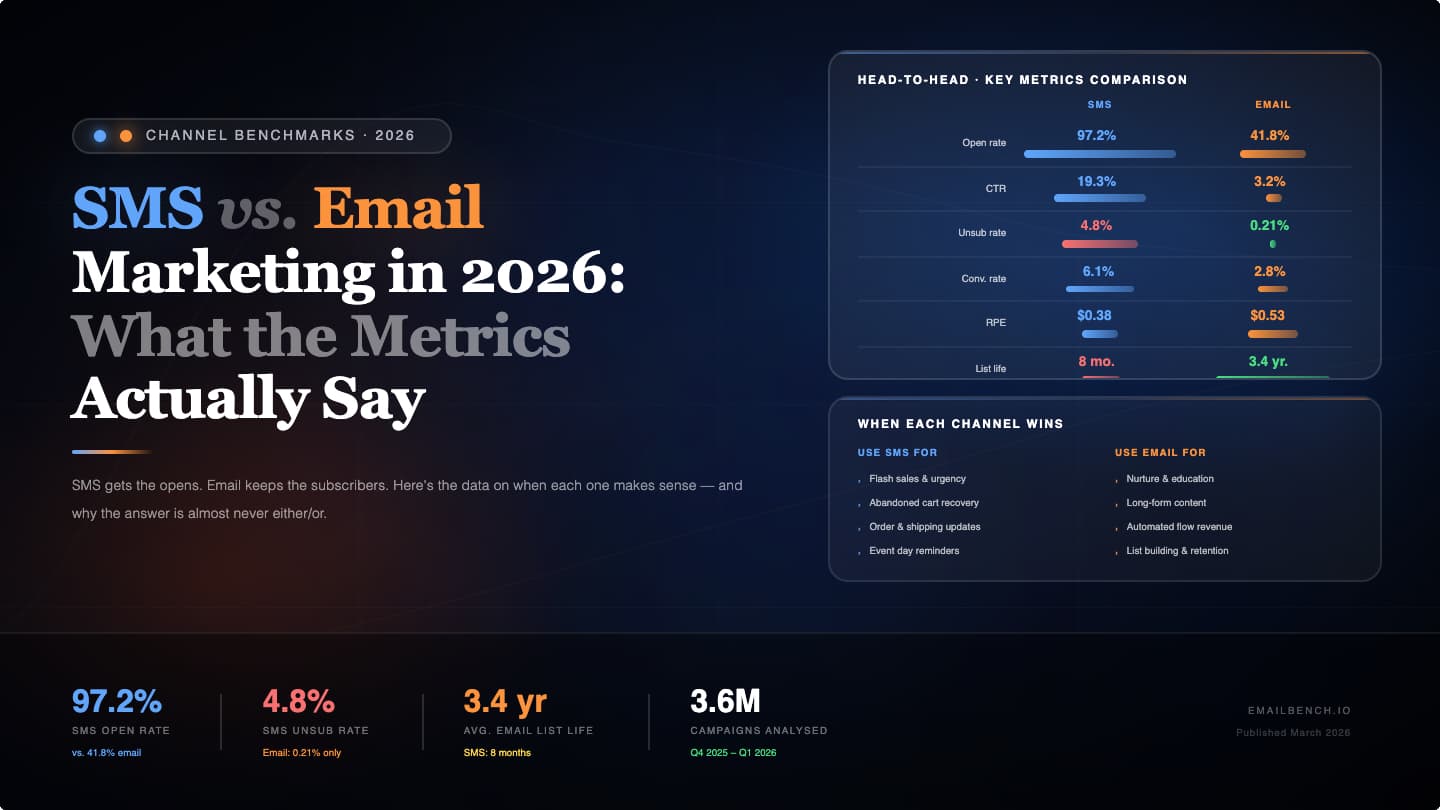
SMS vs. email marketing in 2026: what the metrics actually say about each channel
SMS wins every engagement metric — 90-98% open rates, 6-35% CTR — but email's unsubscribe rates are 10-15x lower and its ROI is more predictable. This post compares the two channels head-to-head on every retention metric, covers what subscribers actually tolerate from each, and lays out when to use SMS, when to use email, and why brands running both see 30% higher customer lifetime value.
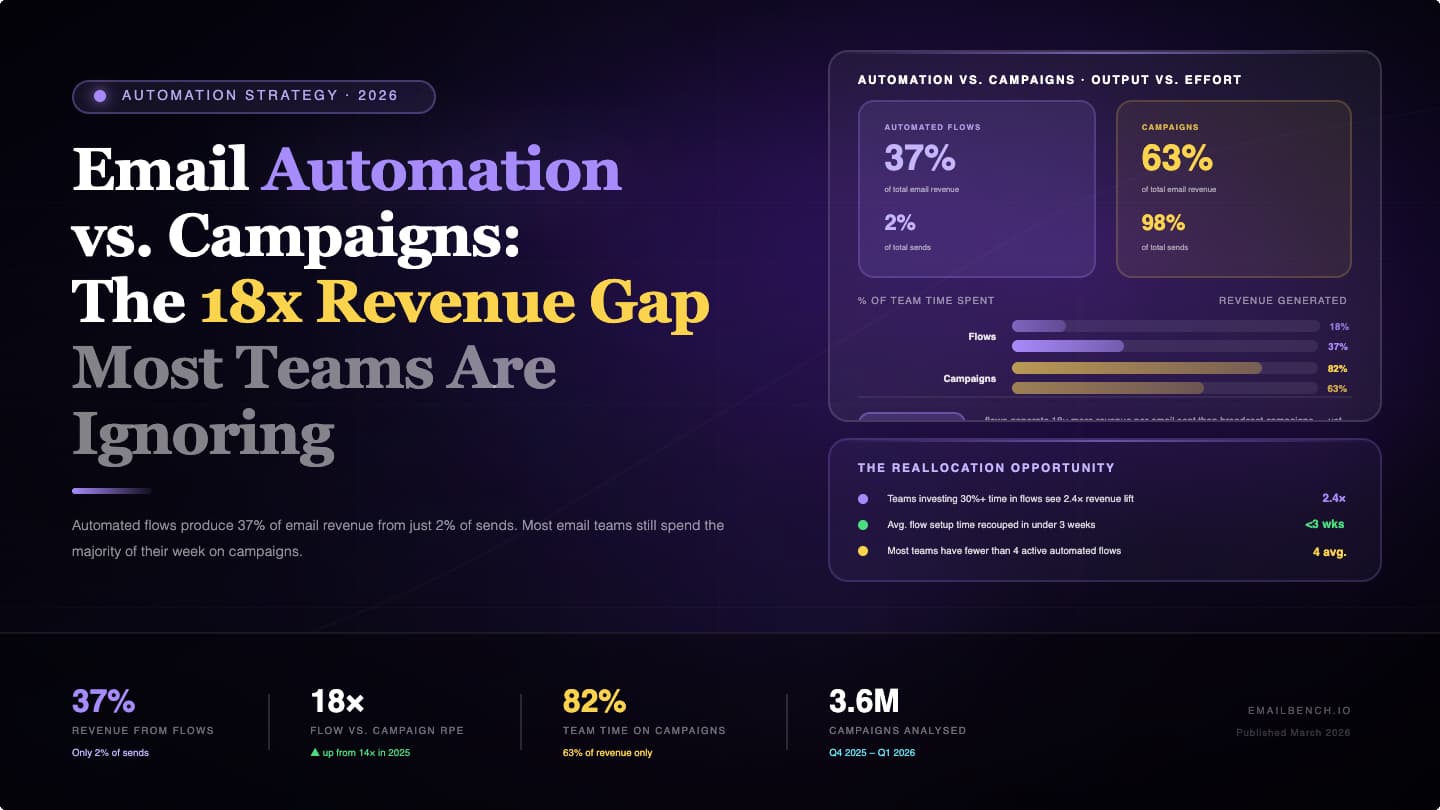
Email automation vs. campaigns: the 18x revenue gap most teams are ignoring
Most email teams spend 70-80% of their time on campaigns, but automated flows generate 37% of email revenue from just 2% of sends. The 17.6x revenue gap between flows and campaigns isn't new — it's just widely ignored. This post breaks down the Klaviyo benchmarks, flow-level RPR data, email ROI by channel, and a practical framework for reallocating your time toward what actually makes money.
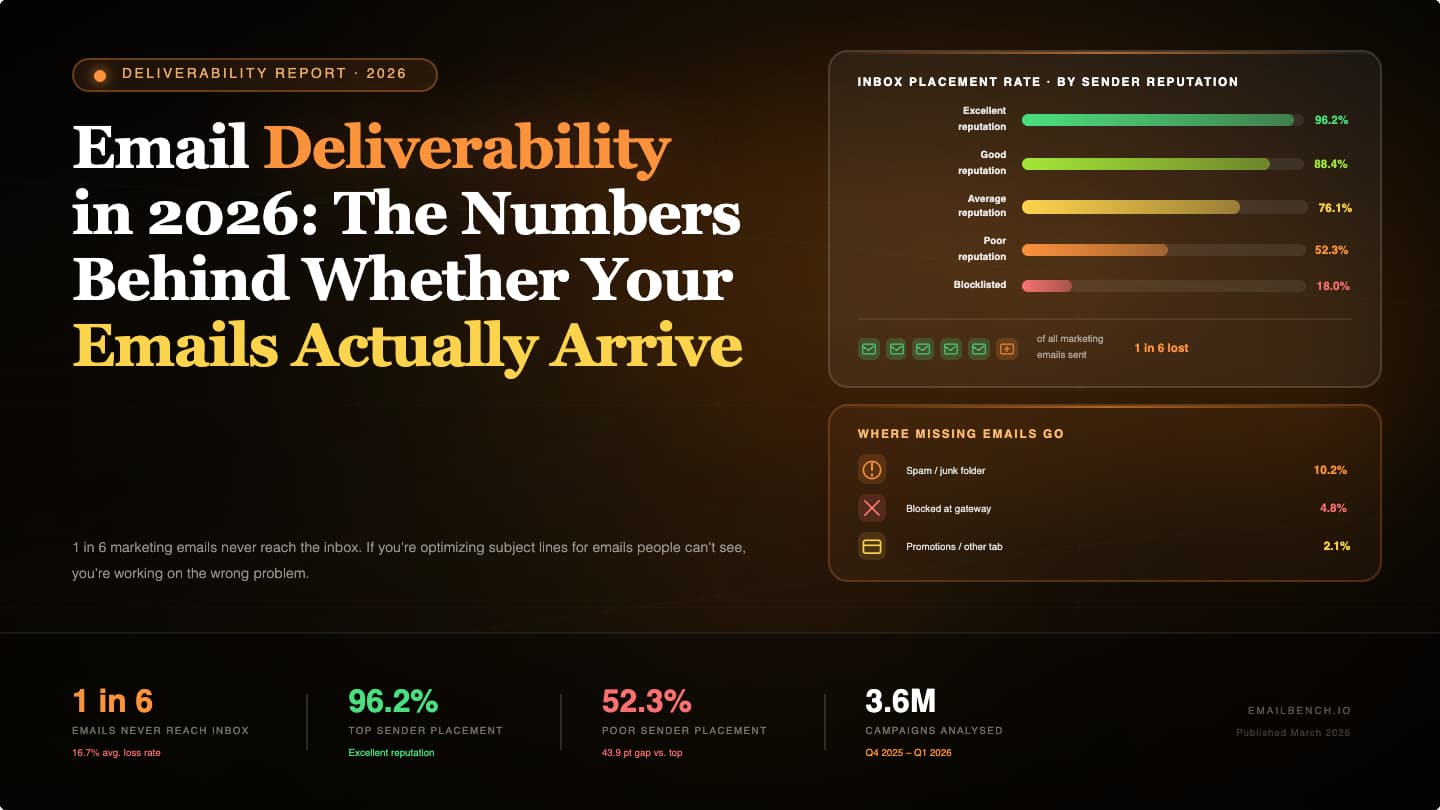
Email deliverability in 2026: the numbers behind whether your emails actually arrive
Email deliverability benchmarks for 2026 — global inbox placement 87.2% (Validity 2026), Gmail 89.8%, Yahoo 87.3%, Microsoft 77.4%, Apple Mail 82%. Apple MPP impact, industry gaps, B2B filtering challenges, BIMI adoption, and Jennings' ratio metrics.
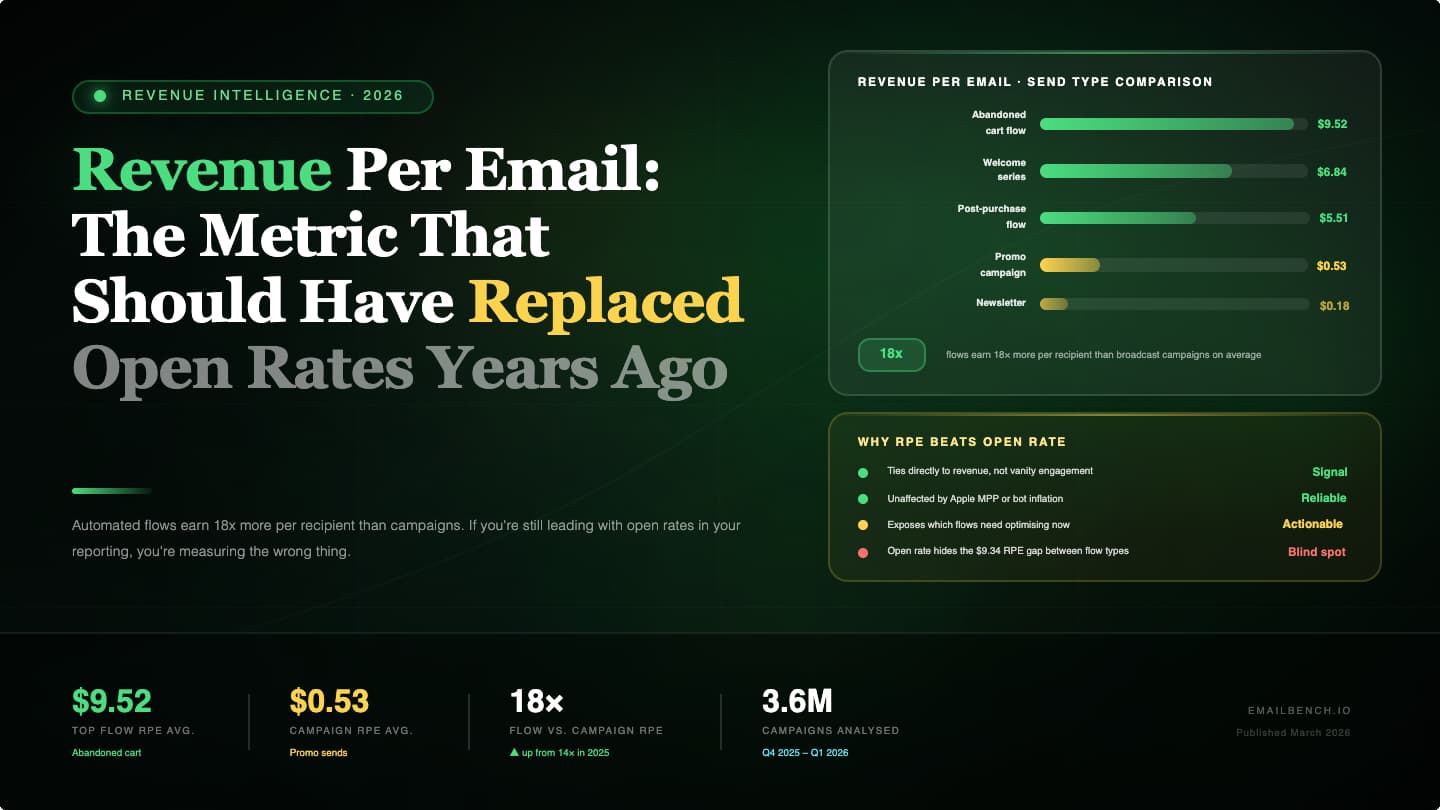
Revenue Per Recipient (RPR) 2026 Benchmarks: $1.94 vs $0.11
Revenue per recipient (RPR) benchmarks for 2026 across 183,000 Klaviyo brands. Campaigns earn $0.11. Automated flows earn $1.94 — an 18x gap. Full data tables, RPME framework, B2B SaaS benchmarks, and HubSpot's $2.05 number reconciled.
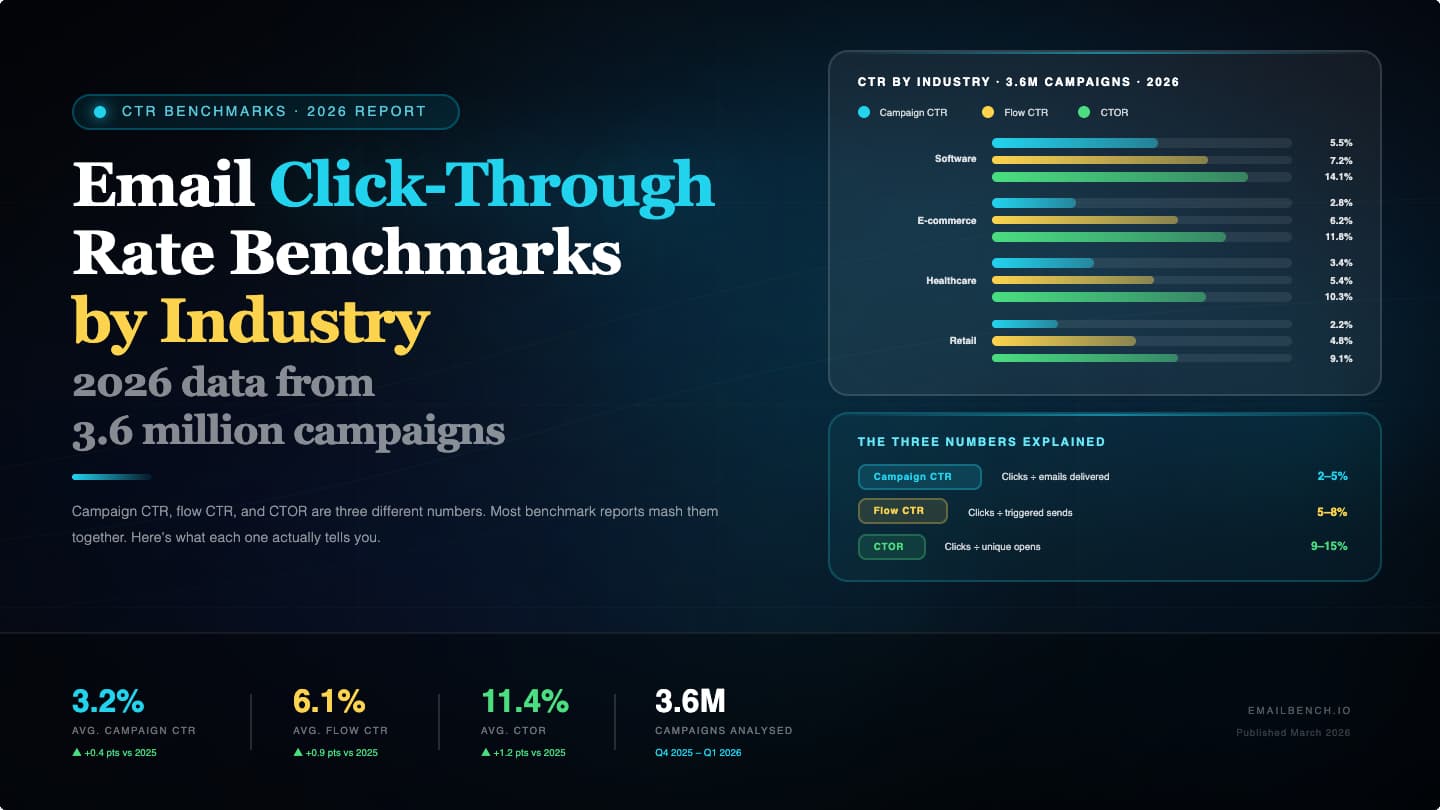
Email click-through rate benchmarks by industry: 2026 data from 3.6 million campaigns
"Opens can be faked but clicks can't" — wrong. Enterprise security tools pre-click every link. Real 2026 CTR benchmarks from 3.6M campaigns, with bot contamination rates and how to filter them.