The Lift
Strategies worth betting your budget on.
Latest articles
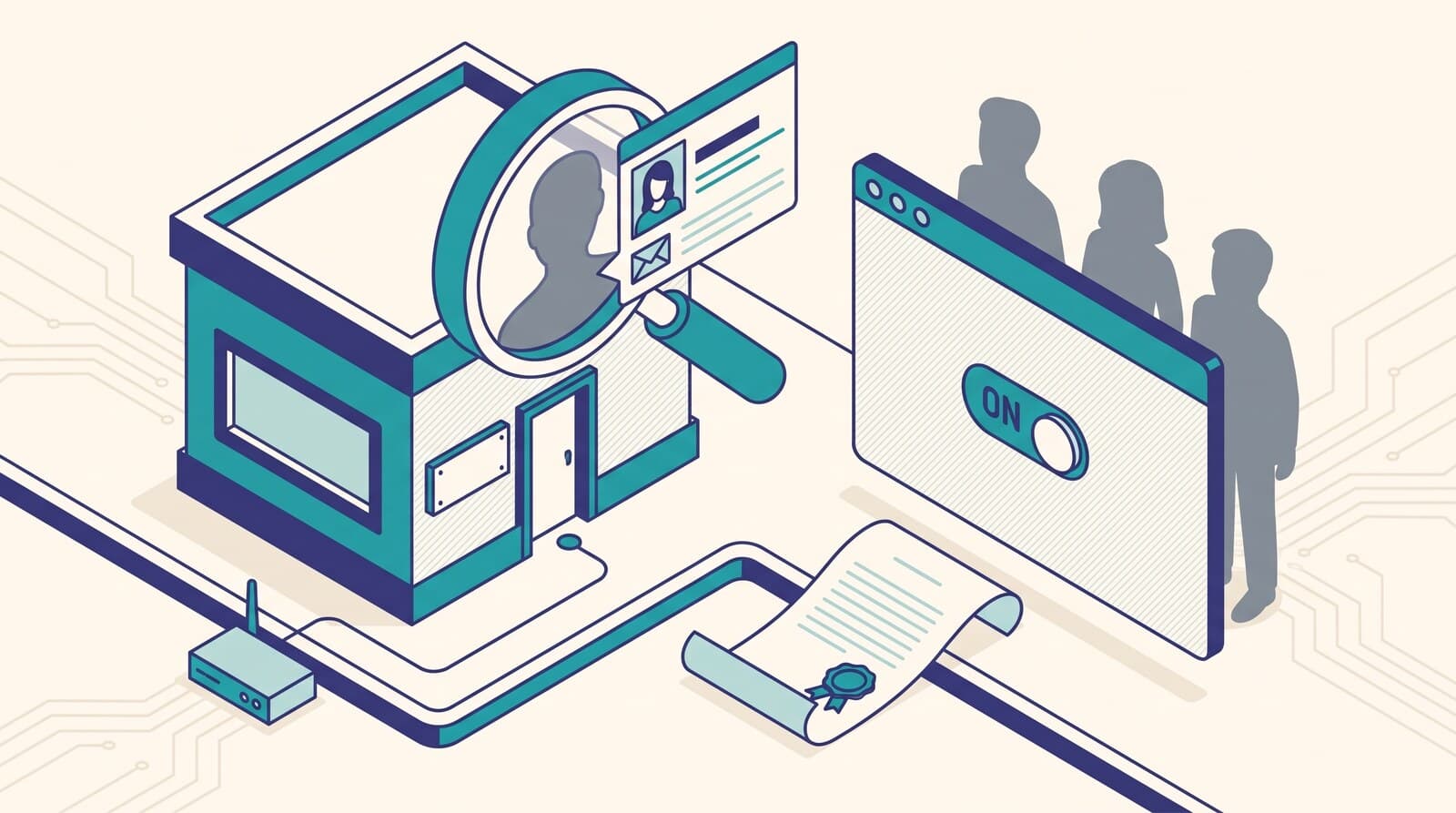
Is an IP Address PII? What US Privacy Law Means for Identifying Website Visitors
California's privacy statute lists an Internet Protocol address by name and treats it as personal information whenever it can reasonably be linked to a consumer or household. This guide walks what an IP address becomes at each step of website visitor identification, when the opt-out signal in the browser has to be honoured, what the California pen-register cases and the Washington wiretap case actually held, and what five identification vendors say they do about all of it.
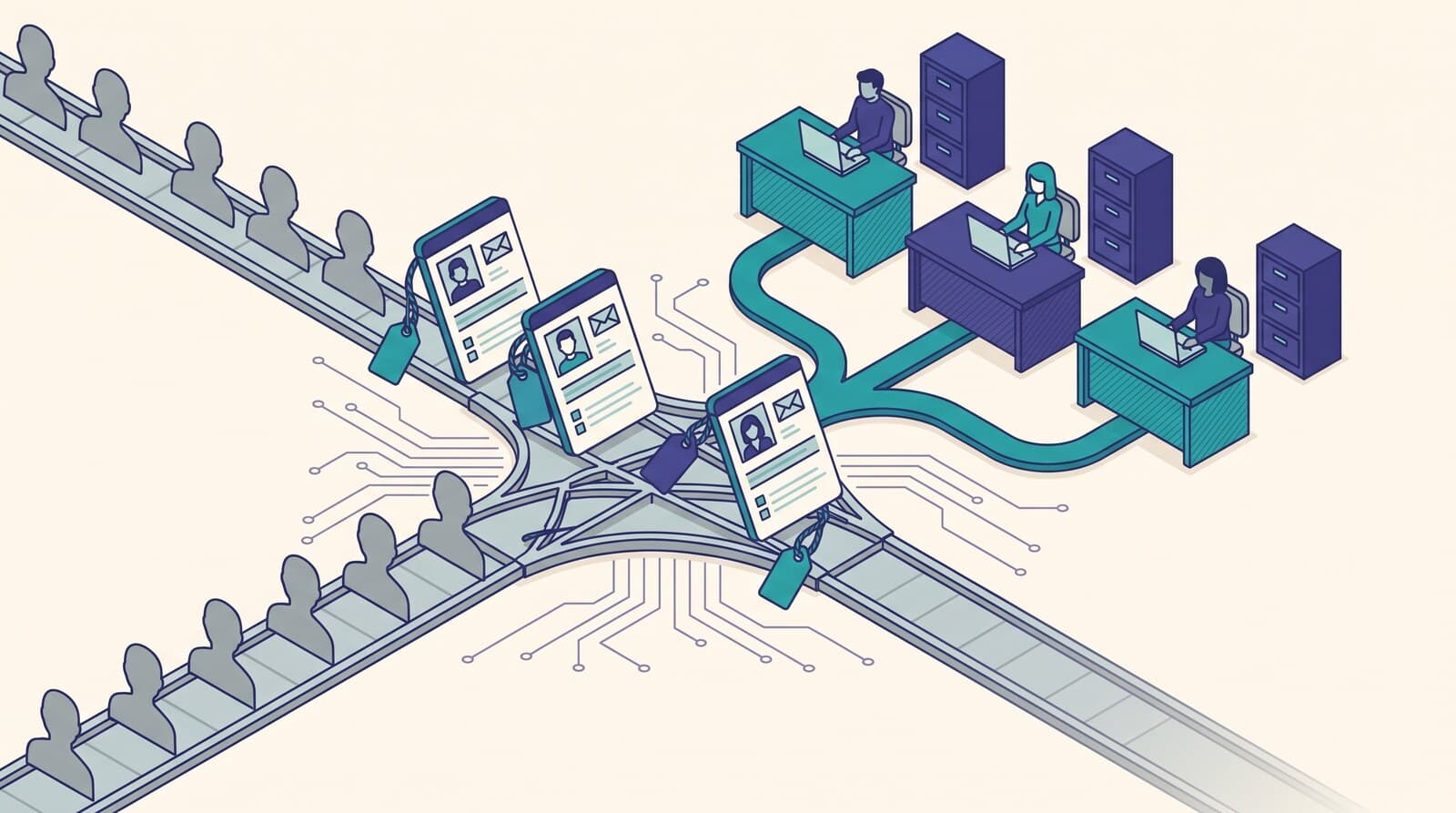
Lead Routing for Identified Website Visitors: From Identified to Pipeline
Identifying a website visitor produces a name, a work email and a page path. What the CRM does with that record in the next sixty seconds decides whether anyone ever acts on it. This guide sets out the five routing decisions in the order they have to run: confidence, buyer-versus-candidate, match before create, owner assignment, and create with the owner already set, with the HubSpot, Salesforce and Bullhorn mechanics for each.
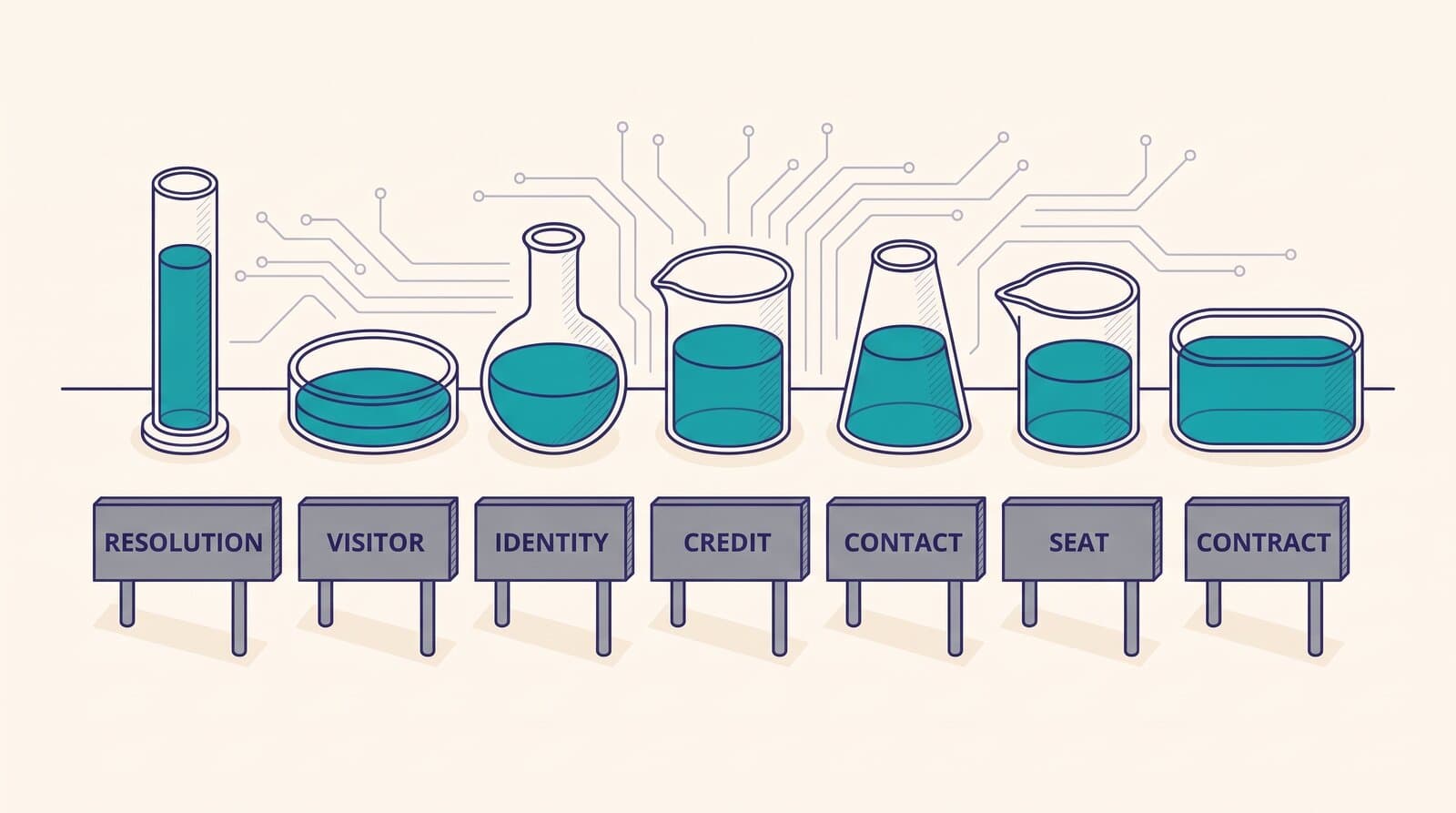
What Website Visitor Identification Costs in 2026
Website visitor identification is sold from $0 a month to $96,000 a year, and the published figure tells you very little on its own. Vendors charge in at least seven different units, so two plans at the same price can buy volumes that differ tenfold. This guide lists every published price as of September 2026, normalises them to cost per identified person, and gives you four questions that make the comparison fair.
Browse all articles
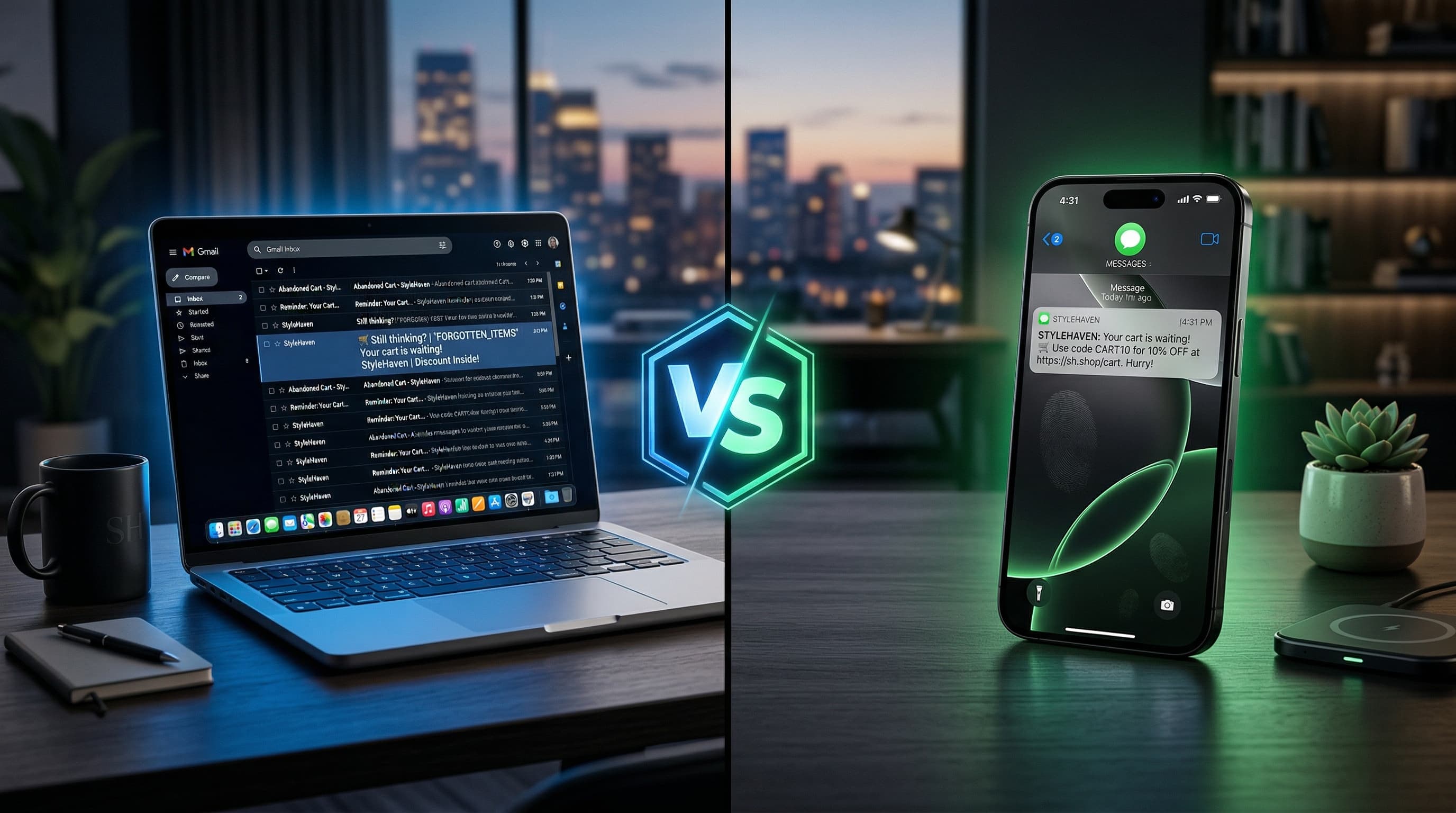
Abandoned Cart Email vs. SMS: Which Actually Recovers More Revenue in 2026?
SMS converts at 15-20%. Email converts at 5-10%. Easy call — until you check your SMS list. Most stores can only text 20-40% of abandoners, while email reaches everyone. Email still drives more total recovered revenue for most brands. The real play in 2026 is both: SMS at 15 minutes for speed, email at 1 hour for depth, alternating through 72 hours. Full timing playbook, cost per recovery math, and the TCPA rules that can cost you $1,500 per non-compliant text.
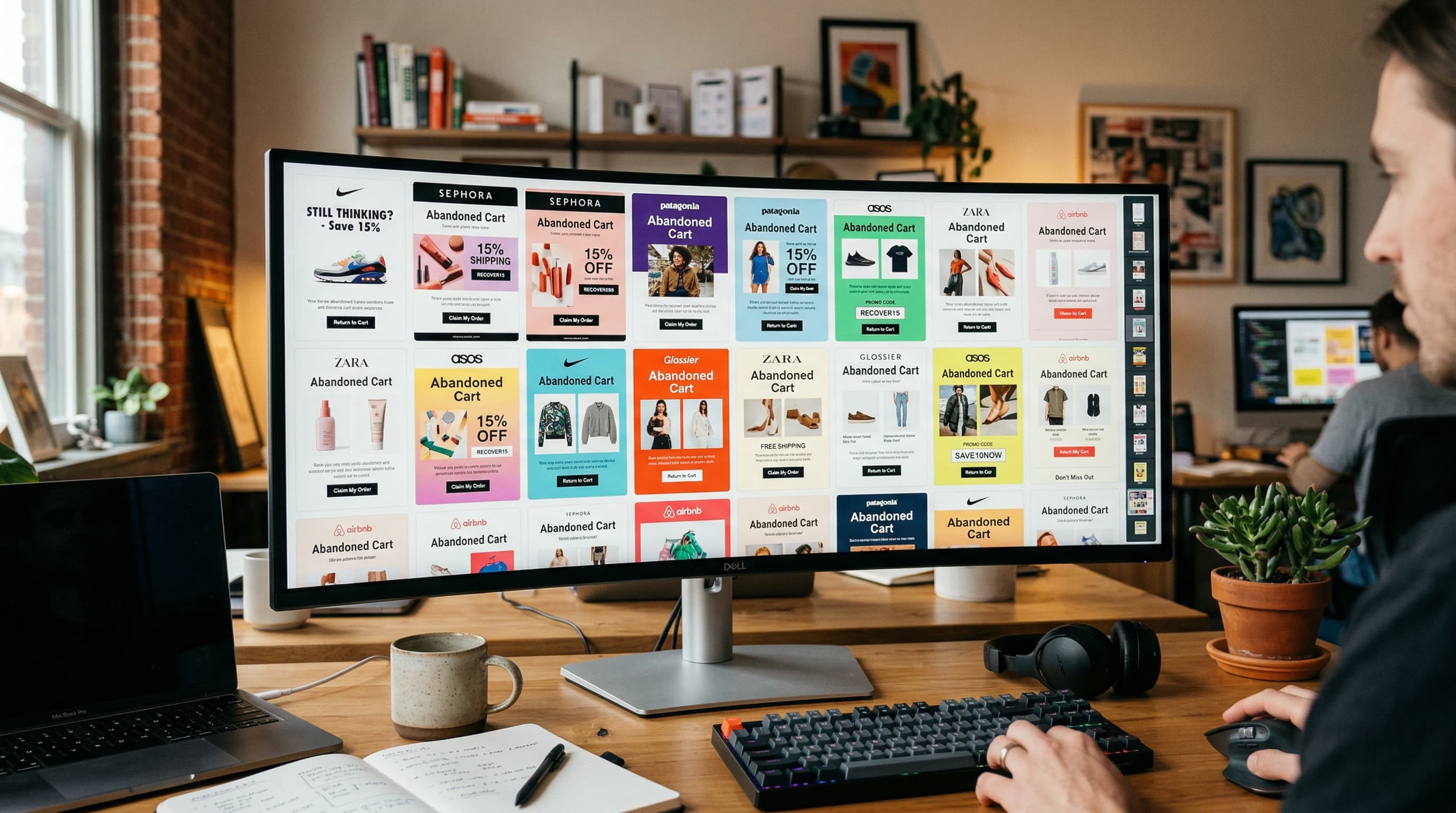
45+ Abandoned Cart Email Examples from Real Brands (With Teardowns)
We analyzed 45+ real cart recovery emails and found the same problem: brands pick one approach regardless of price point or sequence position. A clean reminder works for email 1. Social proof belongs in email 2. Discounts — if at all — go in email 3. Humor lands for casual DTC but tanks for luxury. Each example gets a full teardown: what works, what falls flat, and the strategy behind it. Sorted by approach, not industry, because that matters more.
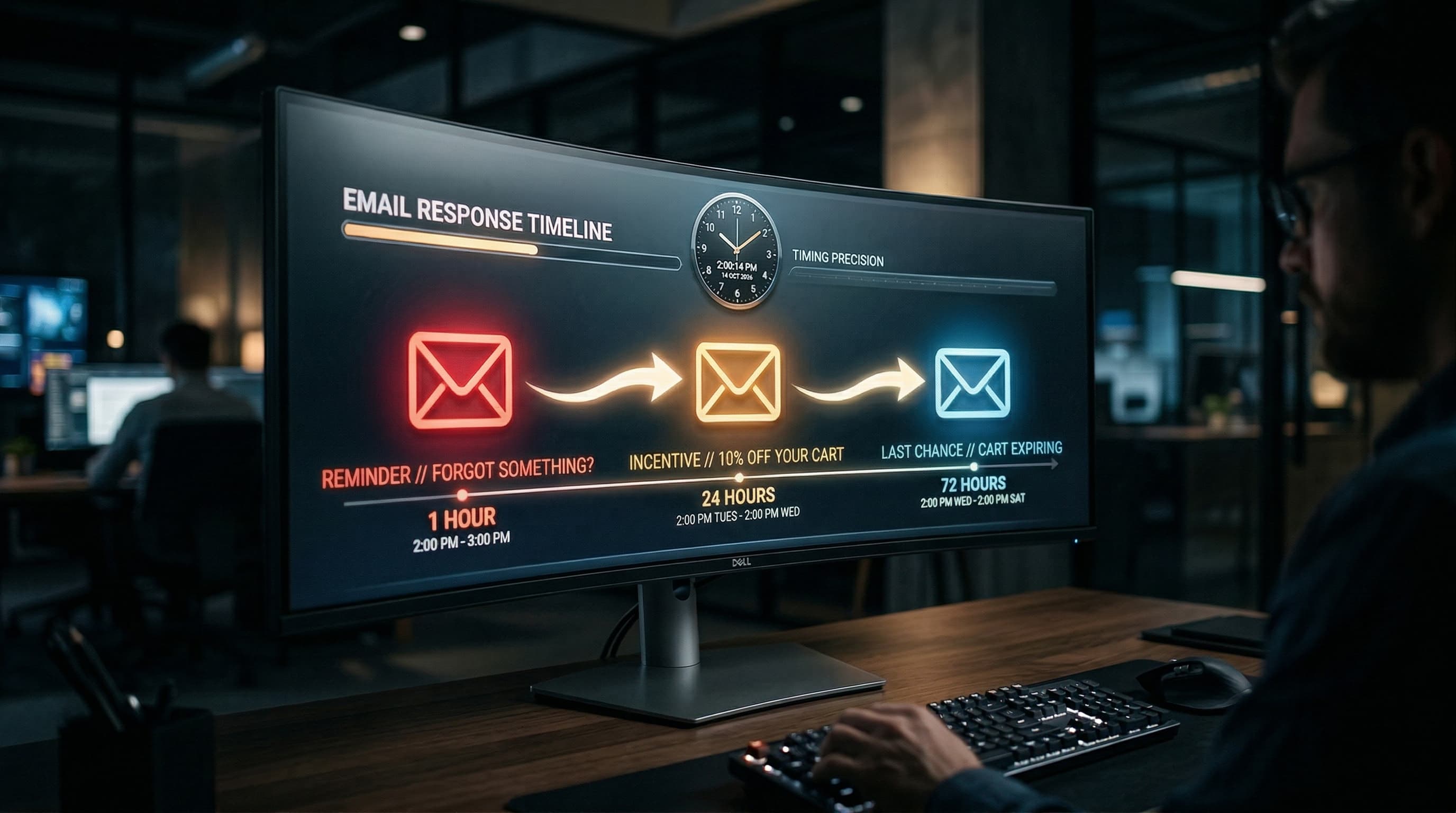
The Abandoned Cart Email Sequence: How Many Emails, What Timing, and Why Most Stores Get It Wrong
Most stores send one cart recovery email at whatever time their platform defaulted to. That alone costs them half their recoveries. The first email at 30 minutes converts 3-5x better than one sent four hours later. But timing is only part of it — each email needs a different job. Email 1 reminds. Email 2 handles objections with social proof. Email 3 closes with an incentive. Same message three times is not a sequence. Exact timing, content per email, and when to extend beyond three.
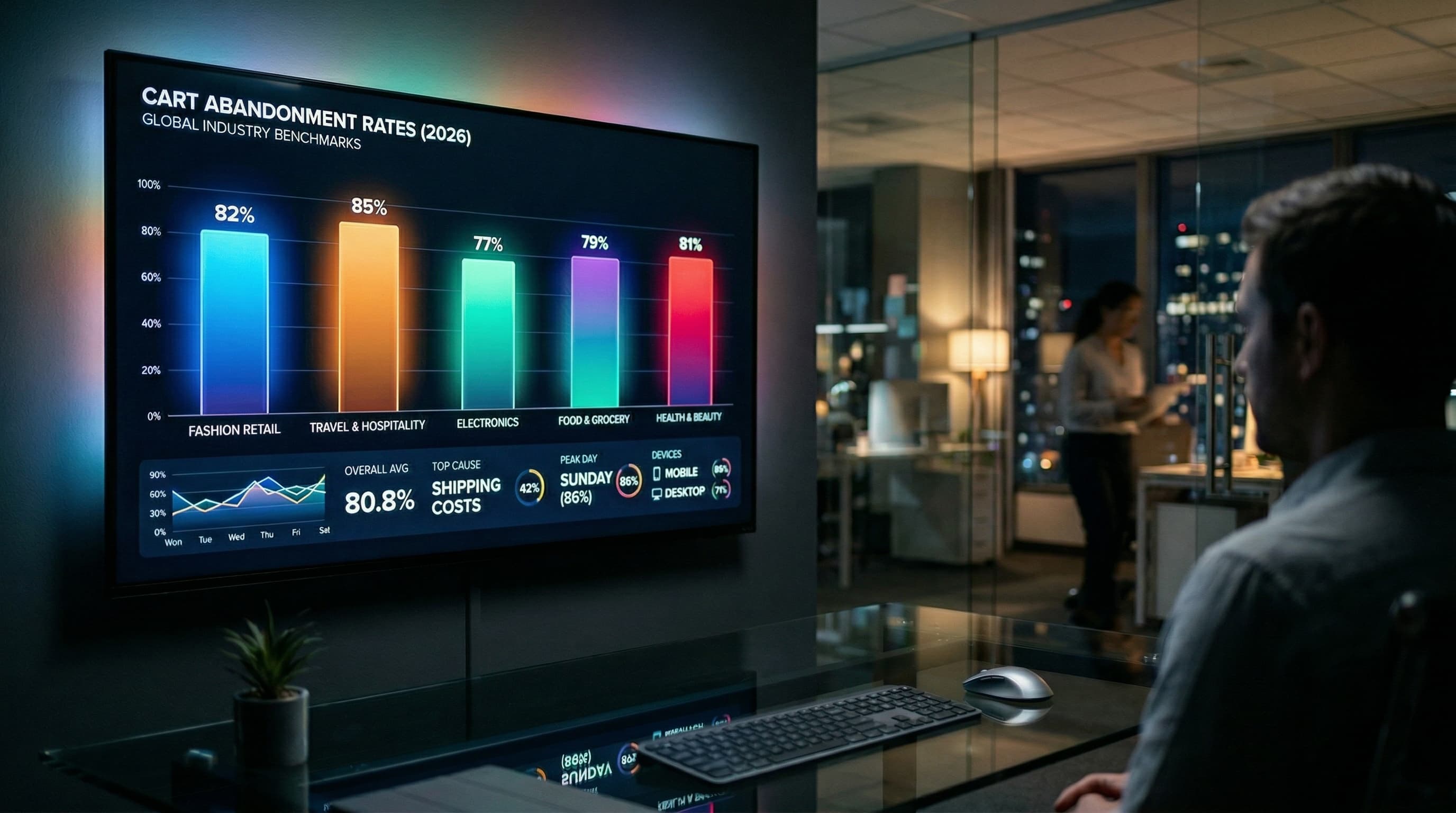
Cart Abandonment Rate by Industry in 2026: Benchmarks That Actually Mean Something
Everyone quotes the 70% cart abandonment average. Almost nobody checks whether that number means anything for their business. In Dynamic Yield's data, pet care abandons at 50.4% and beauty at 79.94%, so the same rate can be normal in one store and a broken checkout in another. We pulled Baymard's 50-study average, Dynamic Yield's twelve-month data and SaleCycle's 2022 sector table, which covers travel, automotive and electronics. Your real benchmark is 5-10% below your industry's figure.
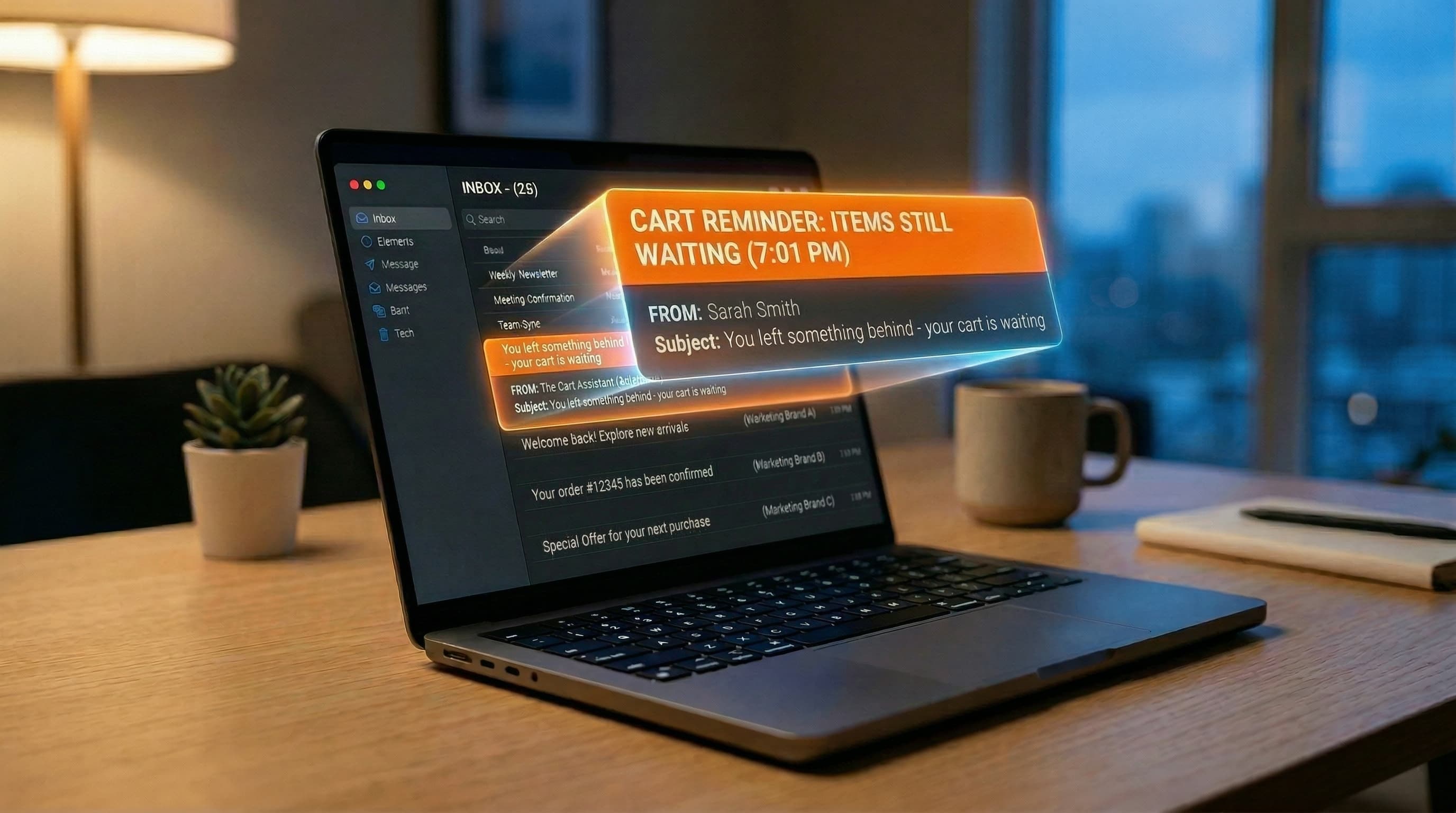
150+ Abandoned Cart Email Subject Lines That Convert (2026)
150+ abandoned cart email subject lines tested across 183,000 brands. Real open-rate data, by-email-position breakdown, Klaviyo + Shopify merge tags, mailbox-app truncation limits, deliverability spam triggers, and the 5 patterns that lift opens 22%+.
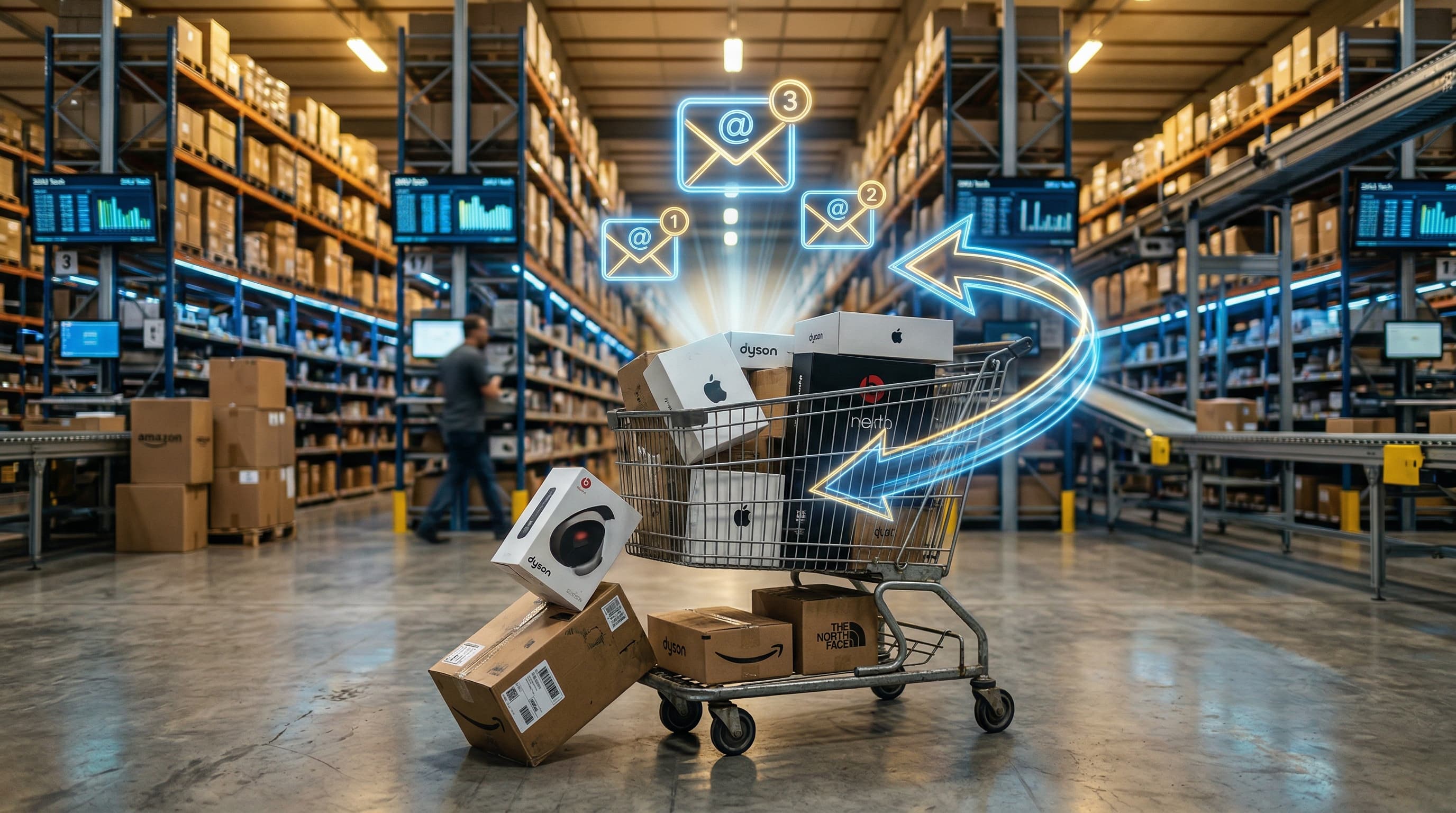
Abandoned Cart Email: The Ultimate Guide to Recovering Lost Revenue in 2026
Seven out of ten shopping carts get abandoned, and Baymard estimates $260 billion in lost US and EU orders is recoverable through better checkout design alone. Most stores send one generic "you forgot something!" email, or nothing at all. We pulled Klaviyo's 2026 cart benchmarks, Omnisend, Baymard and Rejoiner data, and talked to practitioners, to break down the recovery flow, subject lines, when discounts help vs. hurt, and where SMS fits in.
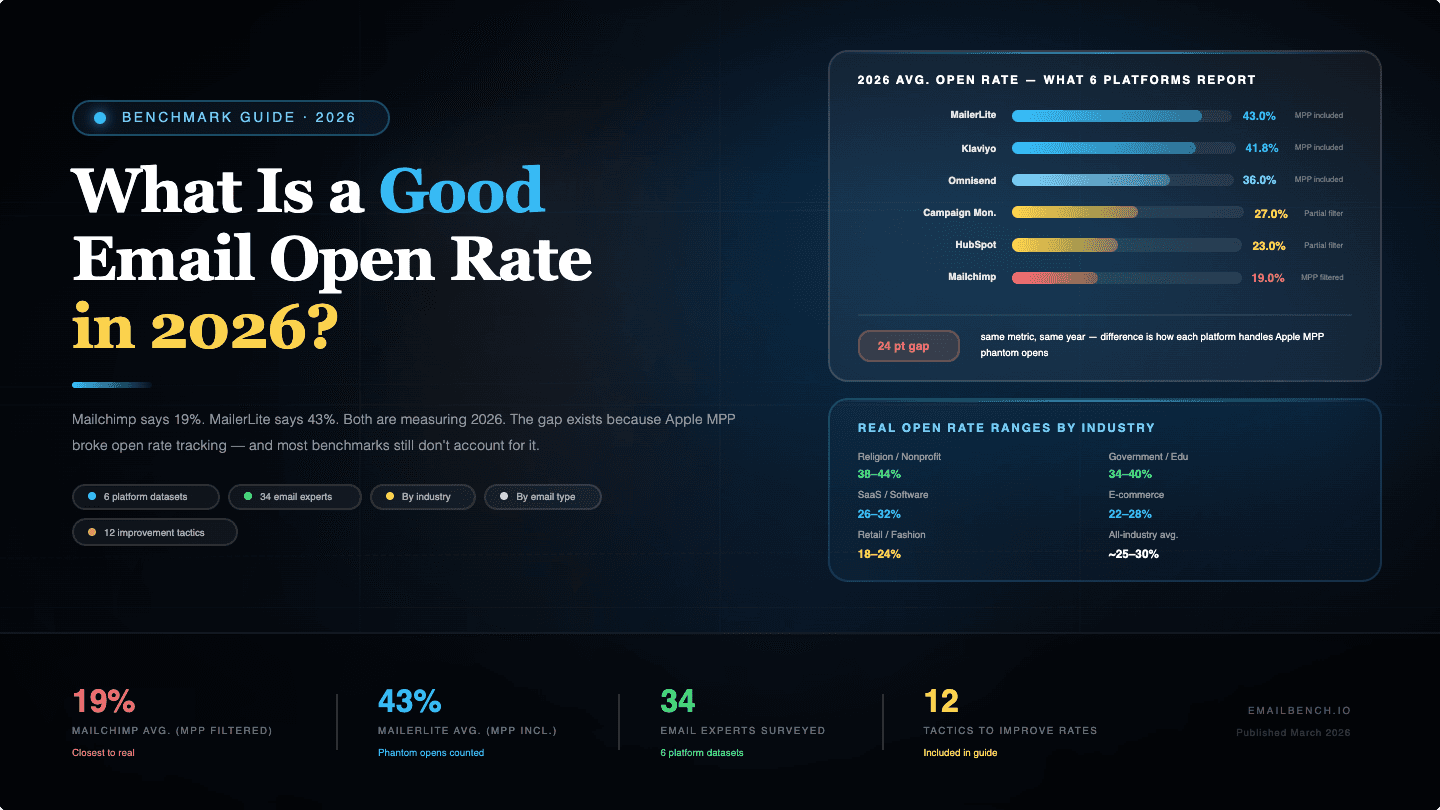
What is a good email open rate in 2026?
Mailchimp says the average open rate is 19%. MailerLite says 43%. Both are measuring 2026. The gap exists because Apple Mail Privacy Protection broke open rate tracking in 2021, and most benchmarks still don't account for it. This guide pulls data from 6 major platforms and 34 email experts to give you real benchmarks by industry, email type, and list size, plus 12 tactics to improve your numbers.
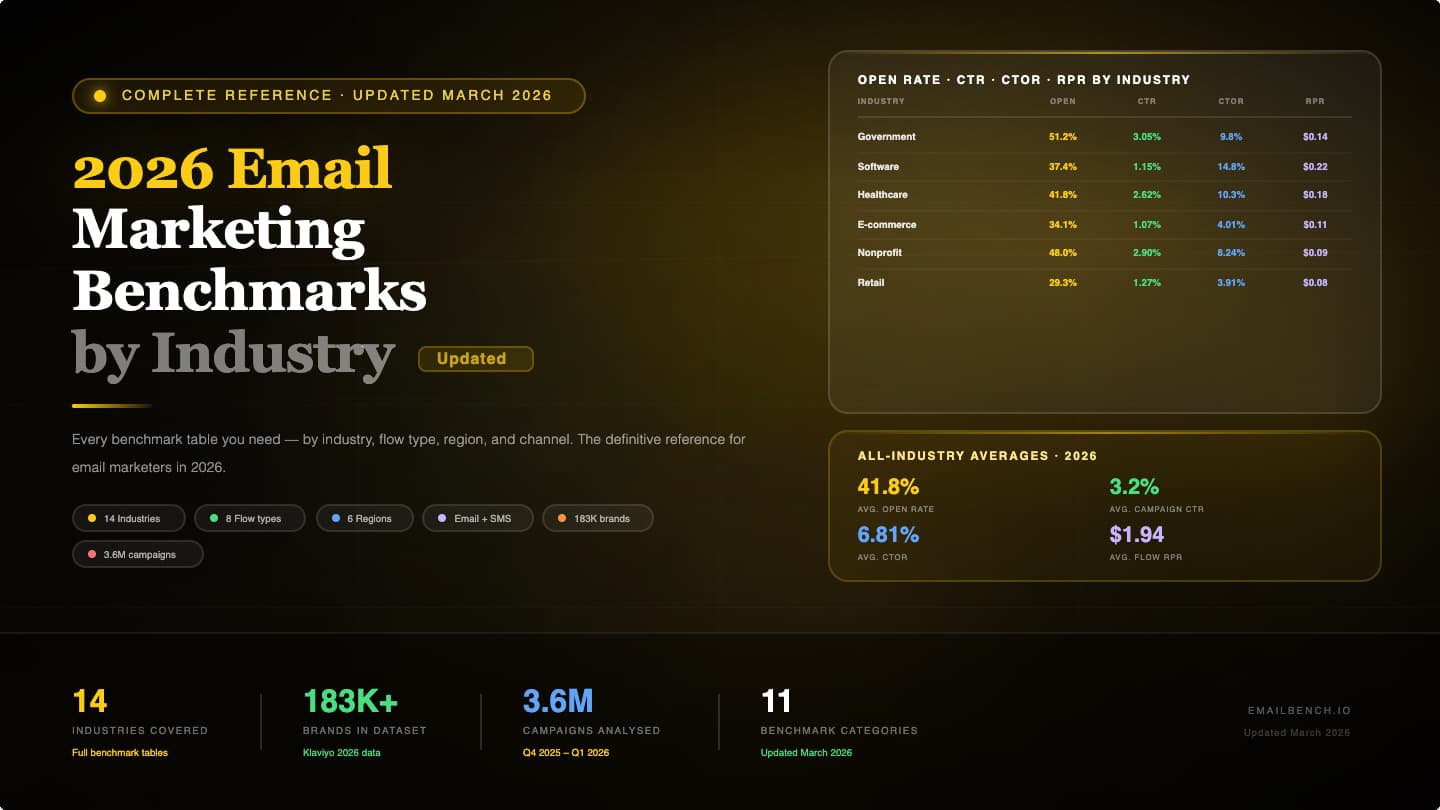
2026 Email Marketing Benchmarks by Industry: The Complete Reference [Updated October 2026]
Think your 31% open rate is bad? It depends on your industry — Religion hits 55.71%, Travel sits at 30.10%, and all of those numbers are inflated by 15-20 points anyway. This is the complete 2026 benchmark reference: 10 tables covering open rates, CTR, RPR, deliverability, regional data, SMS vs. email, AI impact, and send times — sourced from 183K+ brands and 3.6M campaigns. Bookmark it and stop Googling "average email open rate" every quarter.
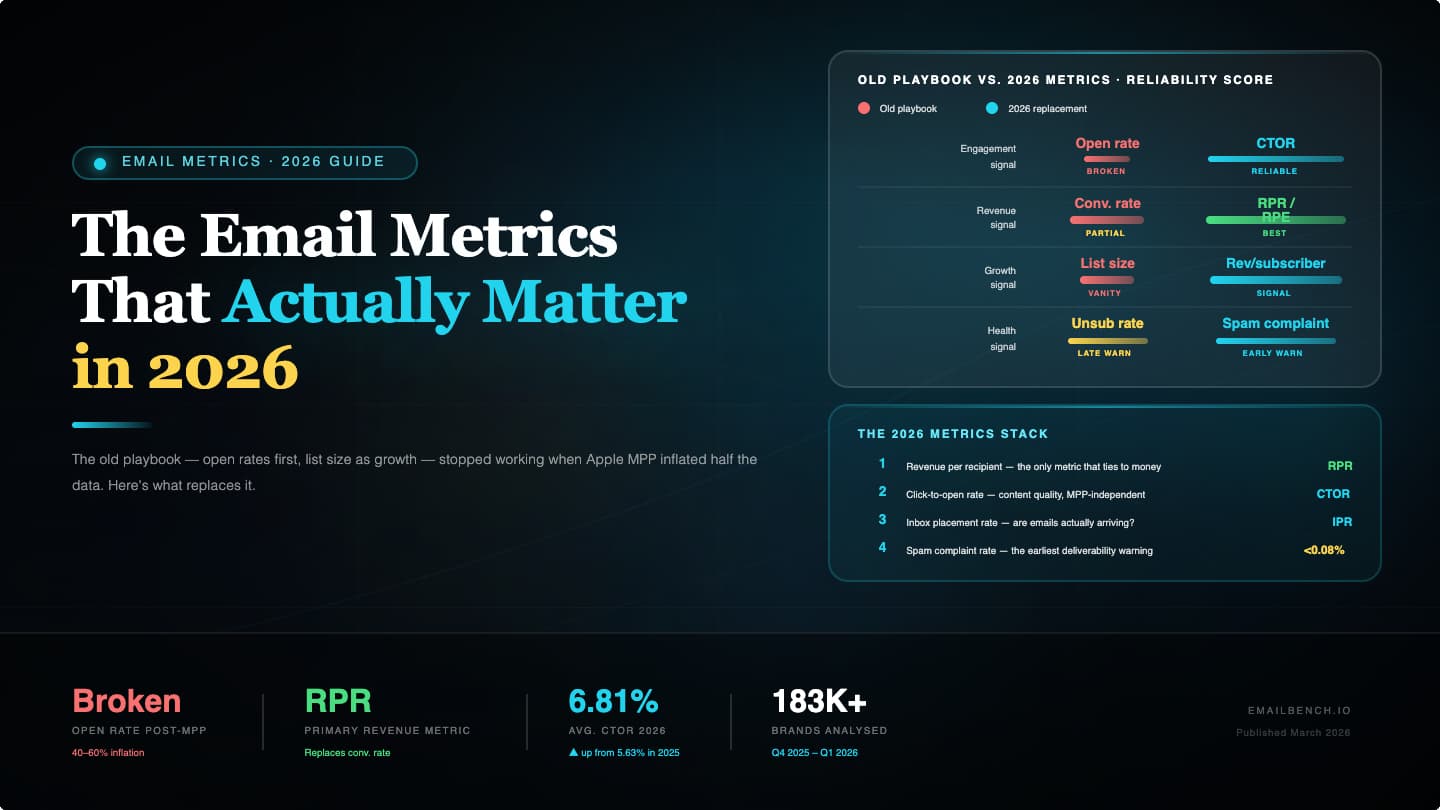
The email metrics that actually matter in 2026
Still reporting open rates first? That hierarchy stopped making sense when Apple MPP inflated half the data. This post lays out a four-tier metrics framework — Revenue, Engagement, Health, and Strategic — built from 183K+ brands and 25 industry experts. It replaces the old open-rate-first playbook with a system that starts where it should: at the money.
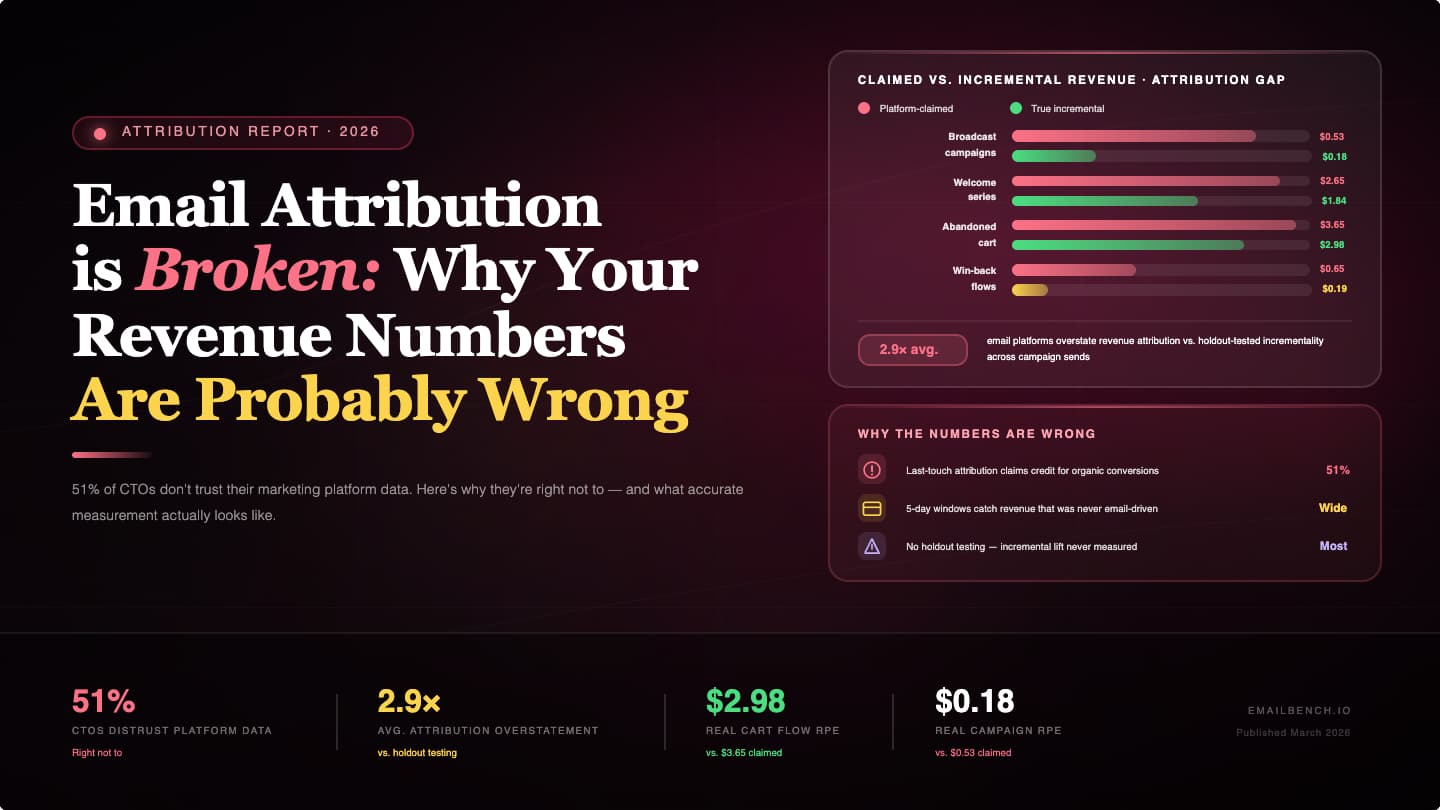
Email attribution is broken: why your revenue numbers are probably wrong
Your ESP says email generated $X this month. That number is almost certainly too high. Last-click attribution gives email 100% credit for purchases that involved multiple touchpoints, and an estimated $66 billion is wasted annually because of it. This post covers why 51% of CTOs don't trust their platform data, how incrementality testing reveals your real email impact, and what privacy regulation means for the tracking signals attribution depends on.
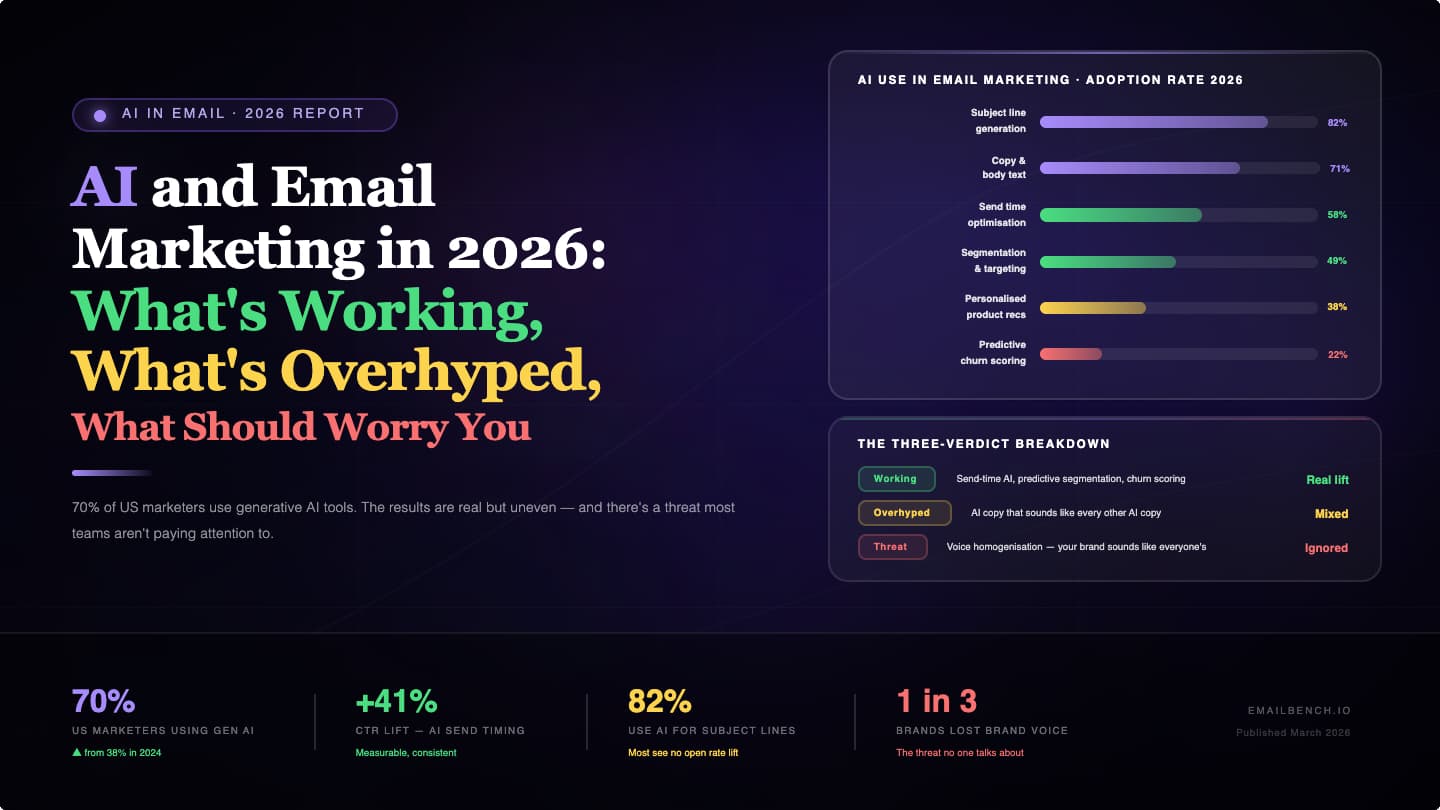
AI and email marketing in 2026: what's actually working, what's overhyped, and what should worry you
AI is improving email metrics in measurable ways — 22% higher open rates from optimized subject lines, 15-23% lift from send-time optimization, 82% conversion gains from 1:1 personalization. Production time has collapsed from weeks to days. But the same tools are making everyone's emails sound alike, and AI gatekeepers like Gmail's CC agent may soon summarize your emails before subscribers see them. The real question is what happens when optimization alone stops being a differentiator?
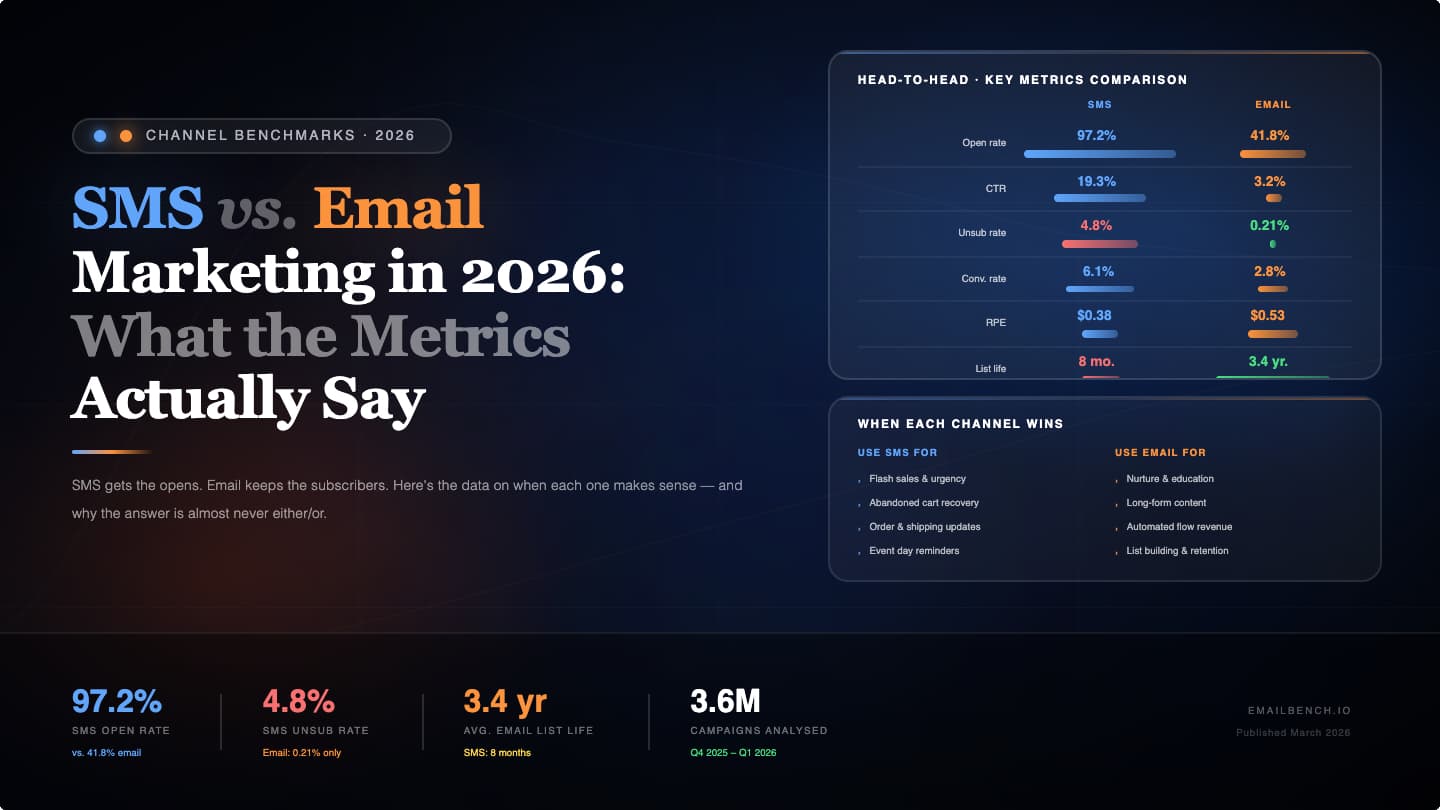
SMS vs. email marketing in 2026: what the metrics actually say about each channel
SMS wins every engagement metric — 90-98% open rates, 6-35% CTR — but email's unsubscribe rates are 10-15x lower and its ROI is more predictable. This post compares the two channels head-to-head on every retention metric, covers what subscribers actually tolerate from each, and lays out when to use SMS, when to use email, and why brands running both see 30% higher customer lifetime value.