Retention Marketing: 15 Proven Strategies to Skyrocket Customer Loyalty
Retention Marketing is a powerful strategy for increasing customer loyalty, driving repeat purchases, and maximizing profits. While many businesses chase new customers, real growth comes from keeping the ones you already have. Acquisition is costly, but loyalty builds lasting revenue. In this guide, you’ll learn what Retention Marketing is, why it matters, how to measure it, and 15 proven strategies to boost lifetime value and sustainable growth.
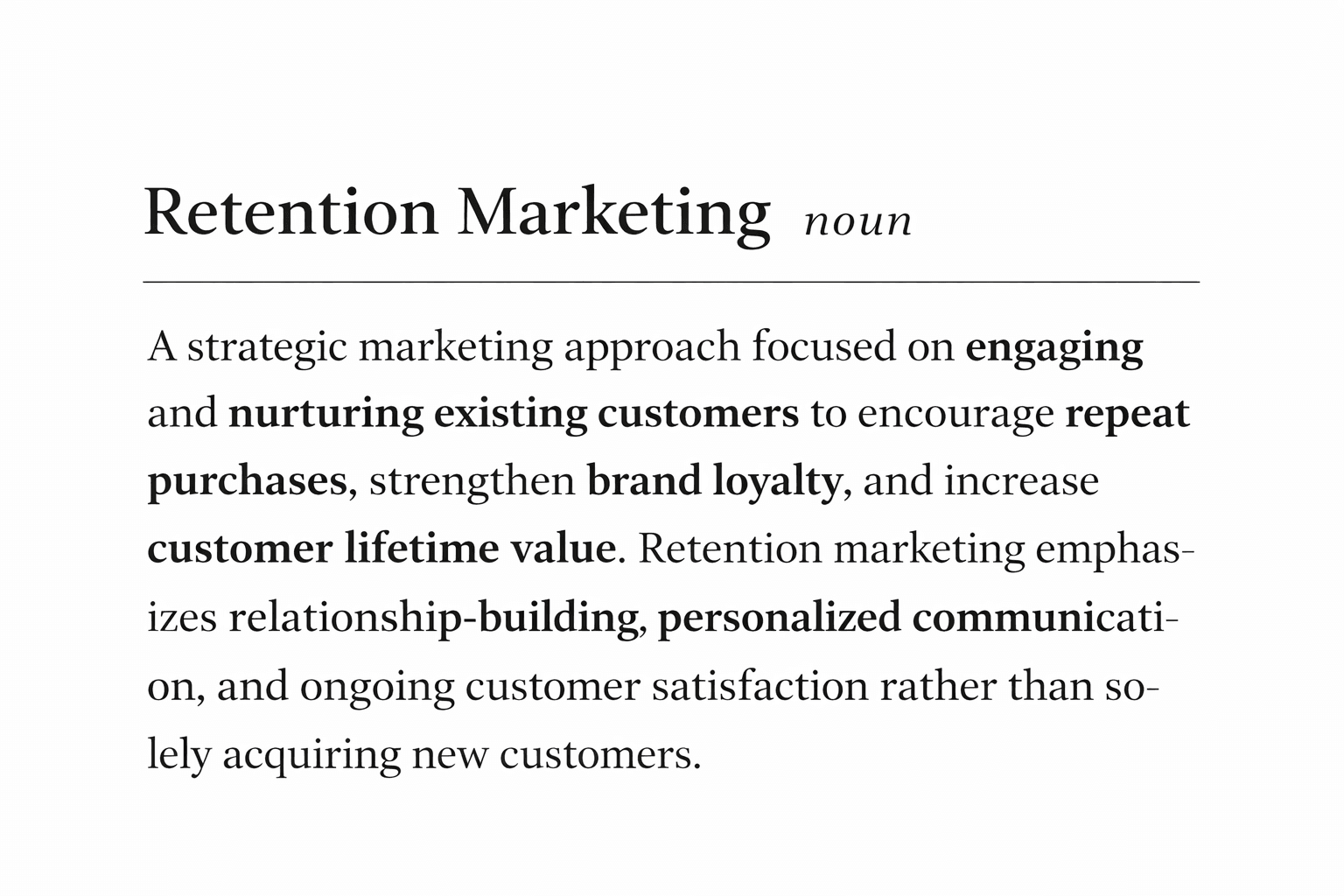
Retention marketing is everything after the first purchase. What it is, how to measure it, and 15 strategies that raise lifetime value.
What is Retention Marketing?
Retention Marketing is a strategy focused on engaging existing customers to encourage repeat purchases and long-term brand loyalty. Instead of spending all your budget on customer acquisition, you invest in strengthening relationships with the people who already trust your business.
It includes tactics like:
- Personalized email campaigns
- Loyalty programs
- Customer feedback systems
- Subscription models
- Remarketing campaigns
The goal is simple: turn one-time buyers into repeat customers and repeat customers into brand advocates.
Why Retention Matters More Than Acquisition
Research consistently shows that acquiring a new customer can cost five times more than keeping an existing one. Even more impressive, increasing customer retention by just 5% can boost profits by 25% to 95%.
Why?
Because loyal customers:
- Buy more often
- Spend more per order
- Refer others
- Require less marketing investment
Retention Marketing creates predictable, scalable growth.
The Psychology Behind Customer Loyalty
Retention Marketing works because it fits how people make decisions.
Emotional Connection Builds Trust
Customers stay loyal to brands they trust. When a company consistently delivers value and positive experiences, customers form emotional bonds. Those bonds often outweigh price differences.
Trust reduces friction. When buying feels easy and familiar, customers come back.
Customer Experience Drives Repeat Purchases
Every touchpoint matters. From checkout to customer service to follow-up emails, experiences shape perception.
A smooth, helpful, and personalized experience dramatically increases the chances of repeat purchases.
Key Benefits of Retention Marketing
Retention Marketing delivers clear business advantages.
Increased Customer Lifetime Value (CLV)
Customer Lifetime Value represents the total revenue a customer generates during their relationship with your brand. The longer they stay, the more valuable they become.
Retention directly increases CLV.
Higher Profit Margins
Repeat customers are easier and cheaper to convert. That means lower marketing costs and higher margins.
Stronger Brand Advocacy
Satisfied customers recommend your brand. Word-of-mouth marketing builds credibility faster than any paid campaign.
Retention Marketing vs. Acquisition Marketing
Both strategies are important, but they serve different purposes.
A balanced strategy is ideal, but long-term stability depends heavily on retention.
15 Powerful Retention Marketing Strategies
Here are the most effective Retention Marketing strategies you can implement immediately.
1. Personalized Email Campaigns
Segment your audience and tailor emails based on behavior, purchase history, and preferences. Personalization significantly increases engagement and conversion rates. For current industry benchmarks on what "good" looks like, see our 2026 Email Marketing Benchmarks.
2. Loyalty Programs
Reward repeat purchases with points, discounts, or exclusive access. Loyalty programs give customers a reason to return.
3. Subscription Models
Offer recurring billing options. Subscriptions increase predictability and long-term revenue.
4. Customer Feedback Systems
Send surveys and collect reviews. Then act on the feedback. Customers value being heard.
5. Remarketing Campaigns
Use targeted ads to re-engage customers who have purchased before or visited your website. For email-based re-engagement, browse abandonment flows are one of the highest-ROI retention tactics available to DTC brands.
6. Exclusive Offers for Existing Customers
Create VIP discounts available only to returning buyers.
7. Strong Onboarding Sequences
Help new customers succeed quickly with email walkthroughs, tutorials, and support resources.
8. Community Building
Create private groups, forums, or online communities. Community builds emotional loyalty.
9. SMS Marketing
Send timely reminders and offers via text. SMS has high open rates and fast response times.
10. Referral Programs
Encourage customers to refer friends in exchange for rewards.
11. Surprise and Delight Campaigns
Unexpected gifts, thank-you notes, or bonuses create memorable experiences.
12. Customer Education
Provide webinars, guides, FAQs, and tutorials to help customers maximize product value.
13. Proactive Customer Support
Reach out before problems escalate. Solve issues quickly and efficiently.
14. Data-Driven Segmentation
Use analytics tools to understand behavior and tailor communication accordingly.
15. Re-Engagement Campaigns
Target inactive customers with special incentives to bring them back. Automated email flows generate 37% of email revenue from just 2% of sends — making automation the highest-leverage re-engagement tool.
Customer Retention Rate
This measures the percentage of customers who continue buying over a specific period.
Formula:
((Customers at End - New Customers) / Customers at Start) × 100
A rising retention rate signals strong performance.
Churn Rate
This measures the percentage of customers who stop doing business with you. Lower churn equals stronger loyalty.
Net Promoter Score (NPS)
This measures how likely customers are to recommend your brand. High NPS indicates satisfaction and advocacy.
Repeat Purchase Rate
This shows how many customers return to buy again. It’s a key indicator of Retention Marketing success.
Performance Results of Strong Retention Marketing
Companies that prioritize retention typically see:
- Increased revenue stability
- Higher customer lifetime value
- Lower acquisition costs
- Improved profit margins
- More predictable recurring income
Improving retention even slightly can dramatically affect overall profitability.
Tools That Support Retention Marketing
Modern tools make retention scalable.
- CRM systems to manage customer data
- Marketing automation platforms
- Analytics software
Common Retention Marketing Mistakes to Avoid
- Ignoring customer feedback
- Sending too many emails
- Failing to personalize
- Not tracking key metrics
- Overlooking customer experience
Avoid these errors to maintain strong loyalty.
The Future of Retention Marketing
Artificial intelligence, predictive analytics, and automation are shaping the future of Retention Marketing. Brands that leverage data and personalization will outperform competitors.
Customer relationships are becoming more valuable than ever.
Frequently Asked Questions
What is Retention Marketing in simple terms?
It focuses on keeping existing customers engaged and loyal.
Why is Retention Marketing important?
It increases profitability and long-term revenue stability.
How do you calculate customer retention rate?
Use the formula: ((Customers at End - New Customers) / Customers at Start) × 100.
What industries benefit most?
E-commerce, SaaS, subscription services, and retail businesses benefit significantly.
How often should you communicate with customers?
Regularly, but in a way that adds value without overwhelming them.
What is the difference between churn and retention?
Churn measures customers lost; retention measures customers kept.
Related Reading
- Browse Abandonment Emails: The Complete Strategy Guide for DTC Brands — how to turn window shoppers into buyers with targeted email flows
- Email Marketing Benchmarks 2026 — open rates, CTR, and revenue per email across 183K+ brands
- Revenue Per Email: The Metric That Should Have Replaced Open Rates — why RPR is the metric that actually matters for retention teams
- What Is a Good Email Open Rate in 2026? — benchmarks by industry and how to interpret yours
Conclusion
Retention Marketing is not just a marketing tactic. It is a long-term growth strategy. By focusing on existing customers, businesses can increase loyalty, boost profits, and build sustainable revenue streams.
Companies that prioritize retention outperform competitors over time because they build relationships, not just transactions.
If you want consistent growth, stronger margins, and a loyal customer base, start investing in Retention Marketing today.

Co-Founder and CEO
Bob Thordarson is CEO and Co-Founder of Geysera, a serial entrepreneur with 25+ years and five co-founded ventures, including Cequint (acquired by TNS in 2010 for $112.5M) and Consumerware (acquired by ParkerVision). A graduate of the University of Washington and MIT Entrepreneurial Masters Program, based in Seattle, he serves on the boards of DRY Soda Co. and the Entrepreneurs' Organization Seattle chapter. He is an expert in retention marketing email systems and methodology for ecommerce and B2B brands — measured by incremental revenue, not vanity metrics.