Tag
first-party data
5 posts
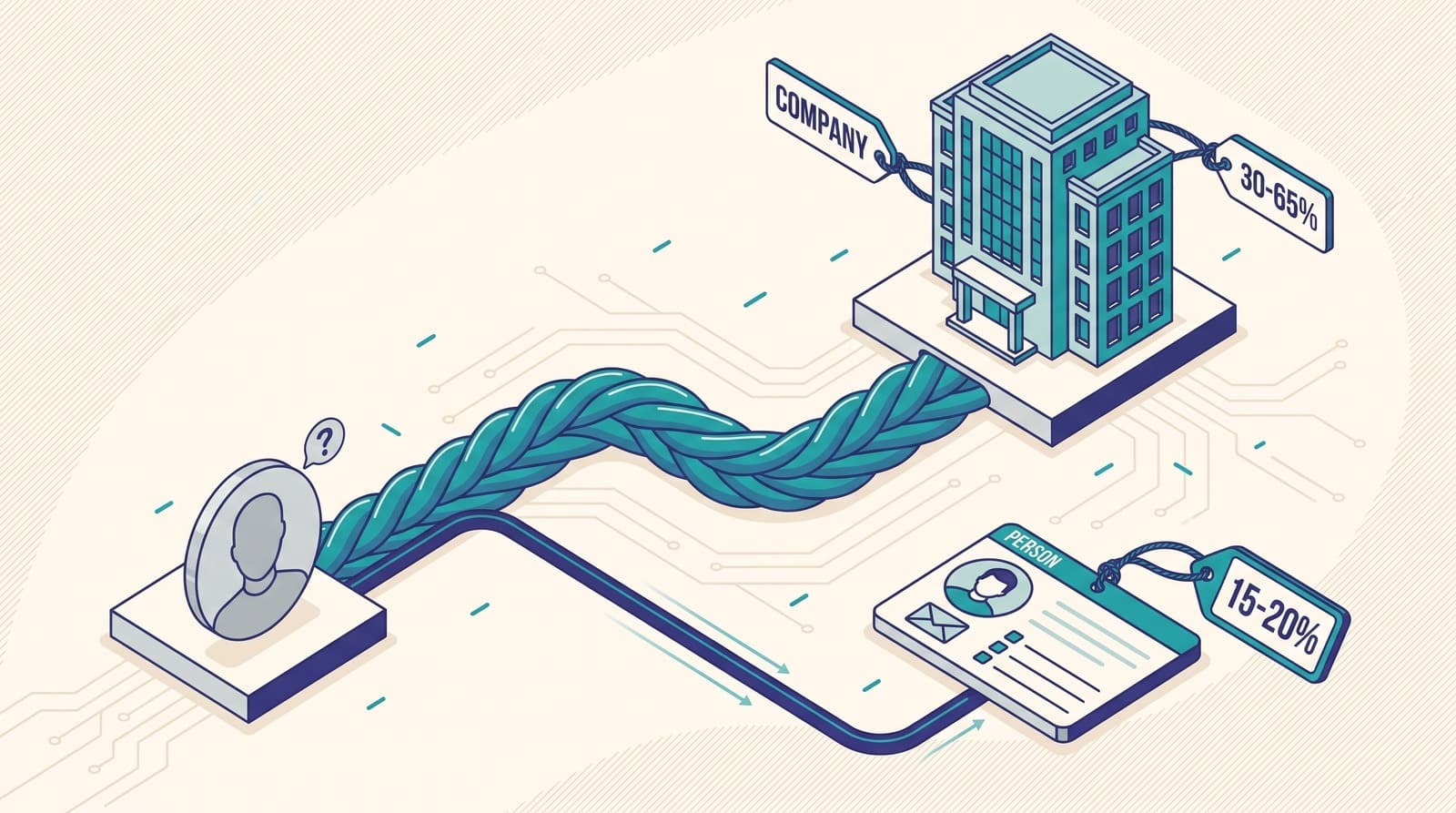
Person-Level vs Company-Level Identification: What You Can Actually Know About a B2B Visitor
B2B website visitor identification resolves anonymous traffic at one of two levels, and the gap between them decides what you can do with the result. Company-level returns an organization from an IP address. Person-level returns a named individual with a work email. This guide covers what each one delivers, what the published match rates actually mean, why one vendor can publish four different numbers for the same product, and the compliance difference that changed on January 1, 2023.
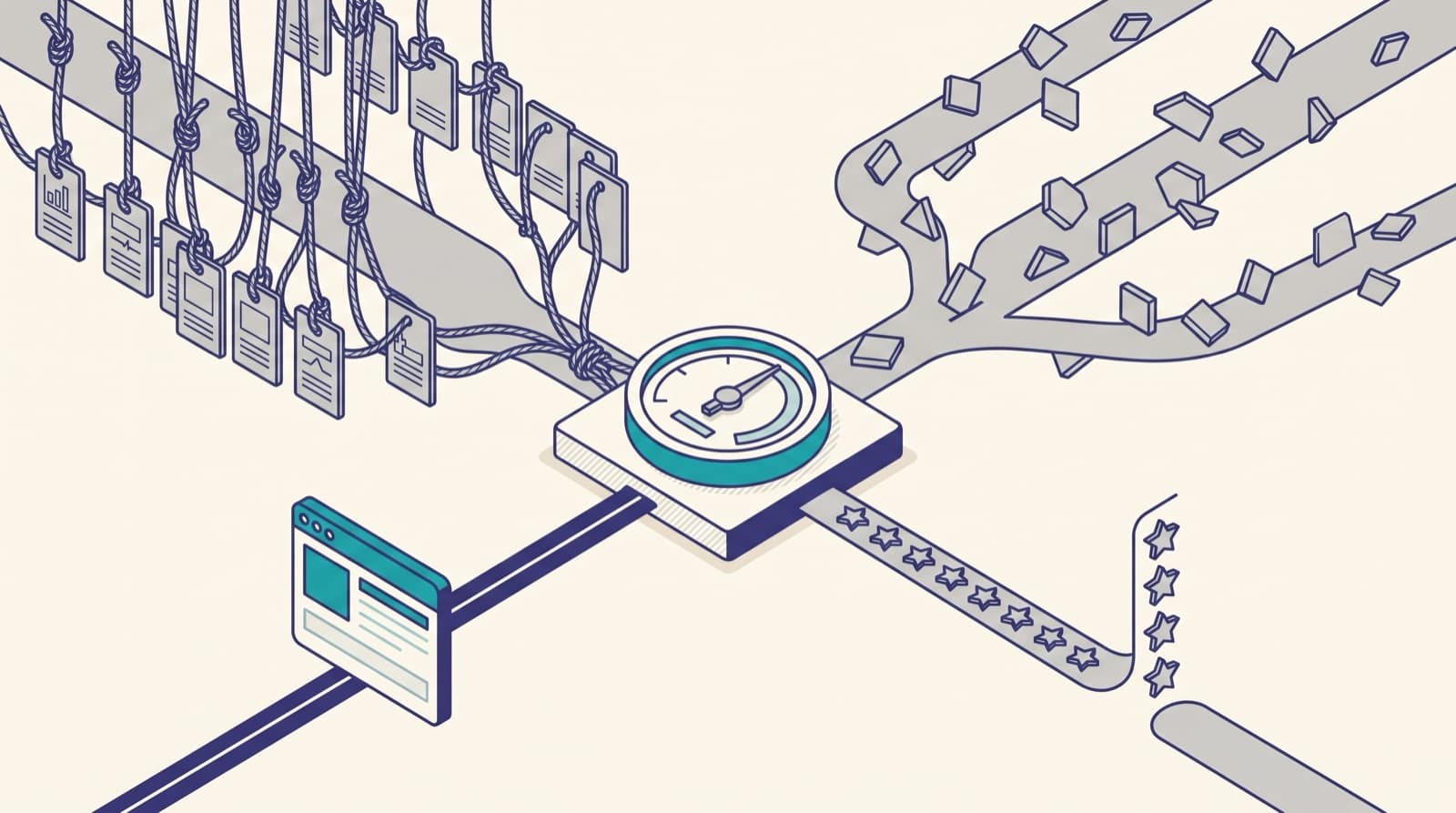
B2B Intent Data Explained — and Where It Breaks
B2B intent data promises to tell you which accounts are researching your category before they ever visit your site. Some of it does. This guide covers the four places intent signals actually come from, what the vendors disclose about their methods, what two European court rulings did to the ad-auction supply, and how to test a provider before you sign.

What Is an Identity Graph? How Anonymous Visitors Get Matched to Real People
An identity graph is the database that turns scattered signals like cookies, emails, device IDs and IP addresses into one real person or company. This guide breaks it down node by node: how a graph matches an anonymous visitor to a name, the difference between deterministic and probabilistic matching, why every graph decays over time, and why a B2B graph is a fundamentally harder problem than the consumer graphs that hit 99% match rates.
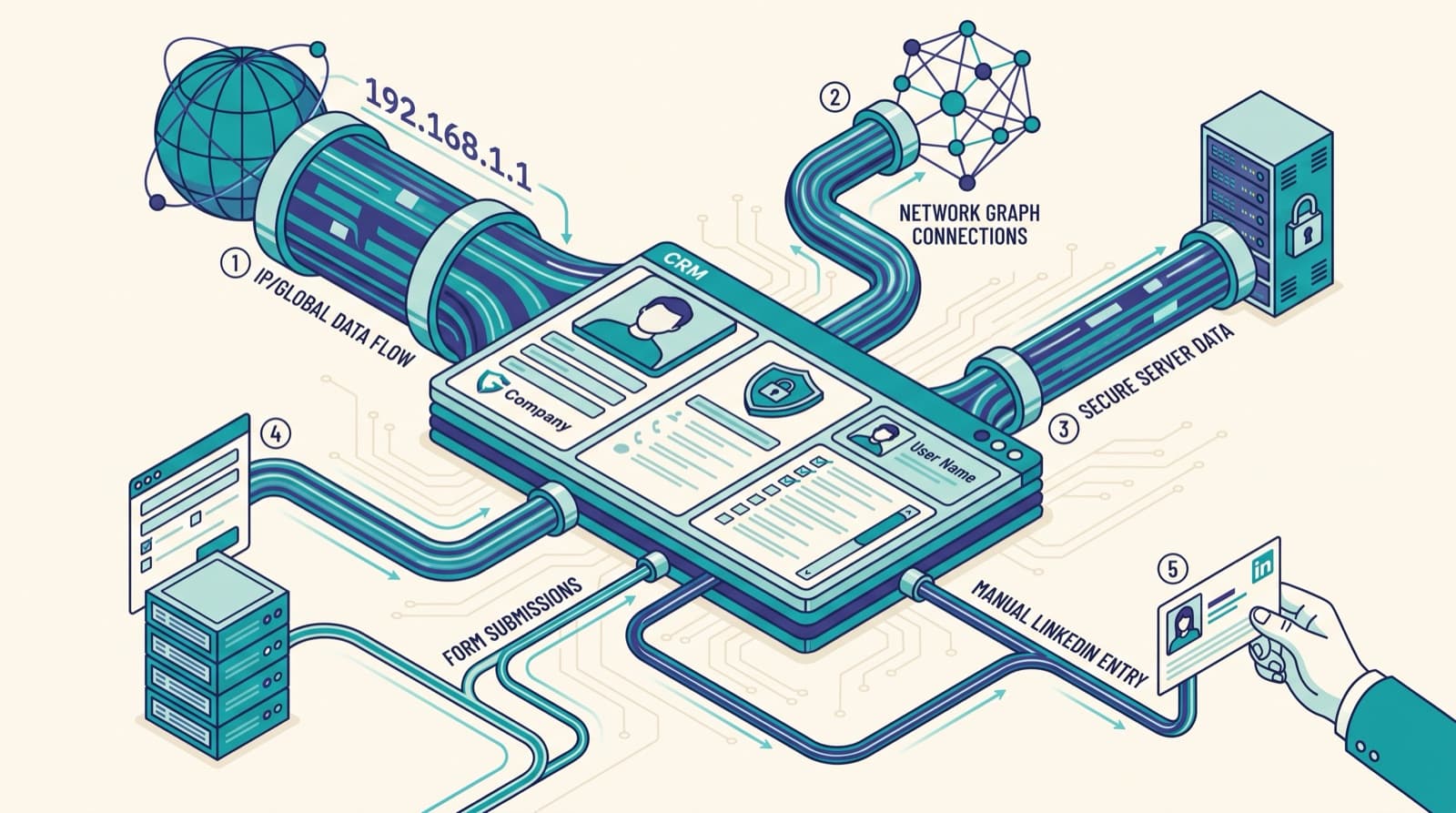
How to Identify Anonymous Website Visitors: 5 Methods and What Each Actually Delivers
There are five real ways to identify anonymous website visitors, and they deliver wildly different things. This guide walks through each method — reverse-IP company lookup, third-party identity graphs, first-party server-side resolution, form fills with enrichment, and manual LinkedIn matching — with the realistic match rate, cost, and limits of each, so you can pick the one that fits your traffic instead of the one with the loudest pitch.
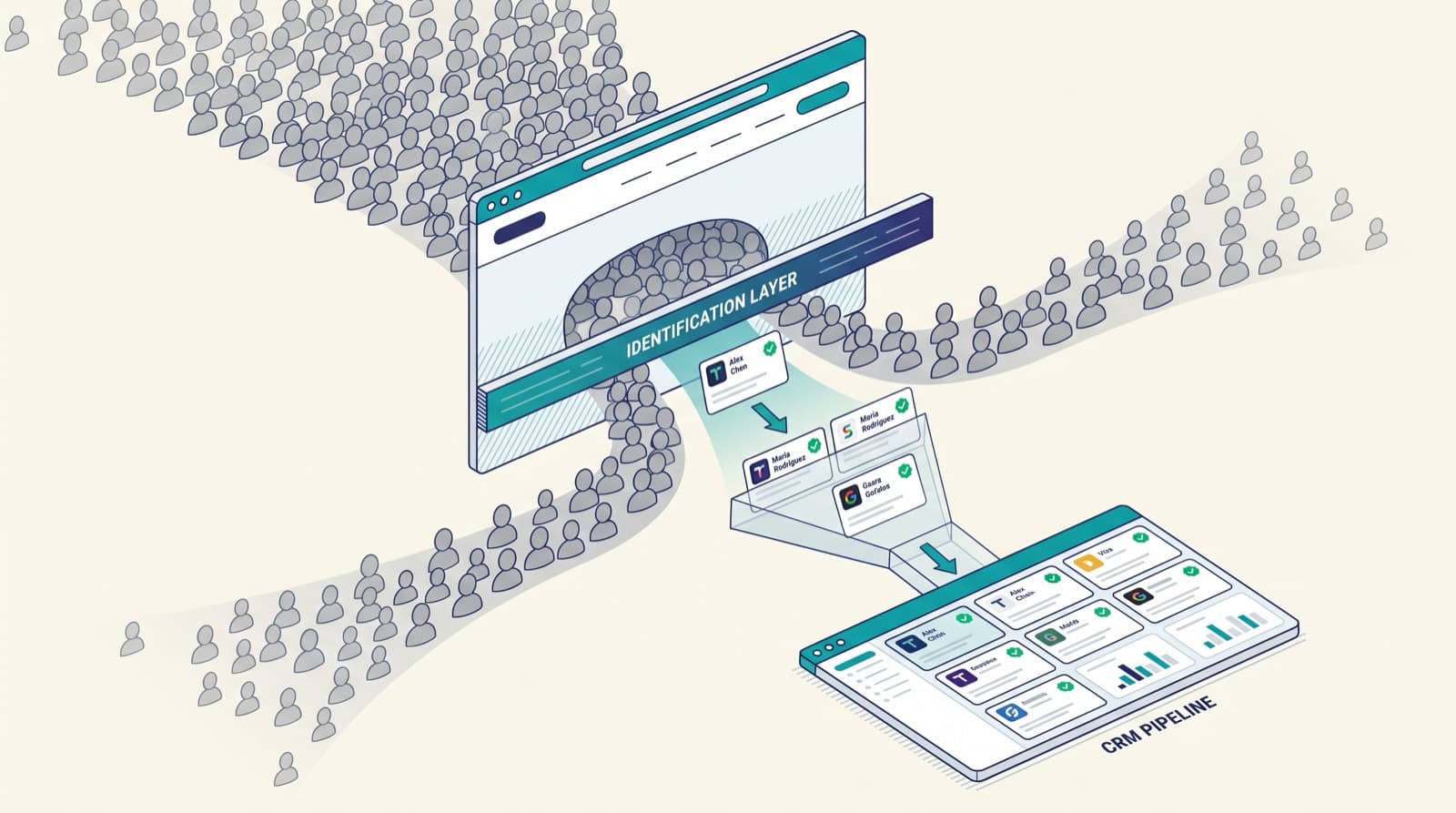
Anonymous Website Visitor Identification for B2B: The Complete 2026 Guide
Anonymous website visitor identification turns a fraction of your invisible B2B traffic into named buyers. This complete 2026 guide covers how it works, person-level vs company-level, the match rates few vendors let you verify, how to route identified buyers into your CRM, and when it's legal to email them.